A Baby Rabbit Has Passed Away: How to Raise the Remaining Survivors Safely
6119 Views |
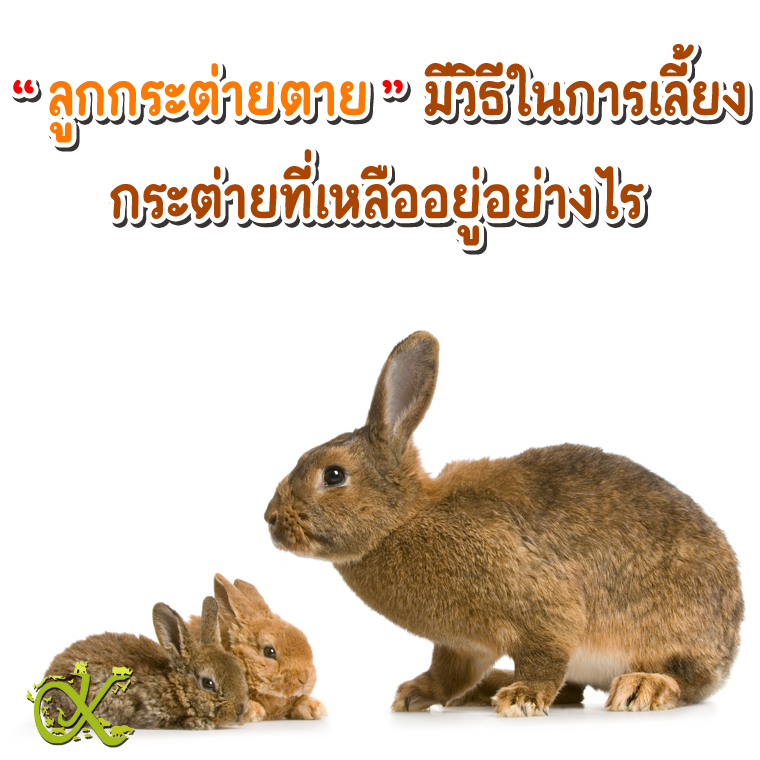
A Baby Rabbit Has Passed Away: How to Raise the Remaining Survivors Safely
By Asst. Prof. Dr. Sompoth Weerakul
If you want to raise your rabbits safely and prevent further losses, follow these essential guidelines. This short guide covers the fundamentals of rabbit nutrition and health monitoring.
1. The Golden Rule: Fiber First
To promote healthy growth and prevent life-threatening diarrhea, the diet must be strictly controlled:
Grass/Hay: Should make up 75%+ of the total diet.
Pellets: For young rabbits, limit this to 1–2 tablespoons per meal, with a maximum of 2 meals per day.
Warning: Overfeeding pellets is a common cause of digestive failure. Do not exceed these portions.
2. Strict Dietary Restrictions
No Treats: Avoid all types of snacks, including fruits and vegetables, for young rabbits.
No Sudden Changes: Any abrupt change in diet affects the pH balance of the gastrointestinal tract. This allows pathogenic bacteria to flourish, leading to enteritis (intestinal inflammation).
3. Monitoring Coccidiosis
Baby rabbits have a high risk of Coccidia contamination. If you notice any abnormality in their droppings, seek a veterinary check-up immediately.
4. Evaluating Health Through Droppings
You can assess your rabbit's health by observing their "fecal pellets" (hard droppings):
Consistency: Pellets should be uniform in size and not easily crumbled.
Quantity: A healthy rabbit produces over 100 pellets daily; large breeds or those over 4 months old may produce over 400.
Size: Adult pellets are typically $0.5$ to $1$ cm. While baby rabbit pellets are smaller, the most important factor is uniformity.
Cecotropes (Night Poop): You should not see soft, grape-like clusters (cecotropes) in the cage. Healthy rabbits consume these directly from the anus. Seeing them often indicates a diet too high in energy (too many pellets or treats), which increases the risk of diarrhea.
5. Feeding by Age Group
Young Rabbits: Focus heavily on Hay or Alfalfa with strictly limited pellets. Even if a brand claims to have high fiber, its high energy content can be dangerous if overfed.
Adult Rabbits: You can transition to a more flexible diet. While some specialized foods (like Bunny Care) can technically replace hay in medical cases—such as for rabbits with dental disease, bloating, or chronic diarrhea—it is still best to use them as supplements.
A Note on Supplements: High-quality recovery foods help with body condition but may accelerate hair growth and shedding. Monitor each rabbit individually to adjust portions.
Summary Warning
Almost all "Junior" or "Baby Rabbit" pellet brands are very high in energy. If fed without restriction, they can cause digestive upset, diarrhea, and sudden death. Strict portion control is the key to survival.


