Skin Diseases in Rabbits
35518 Views |
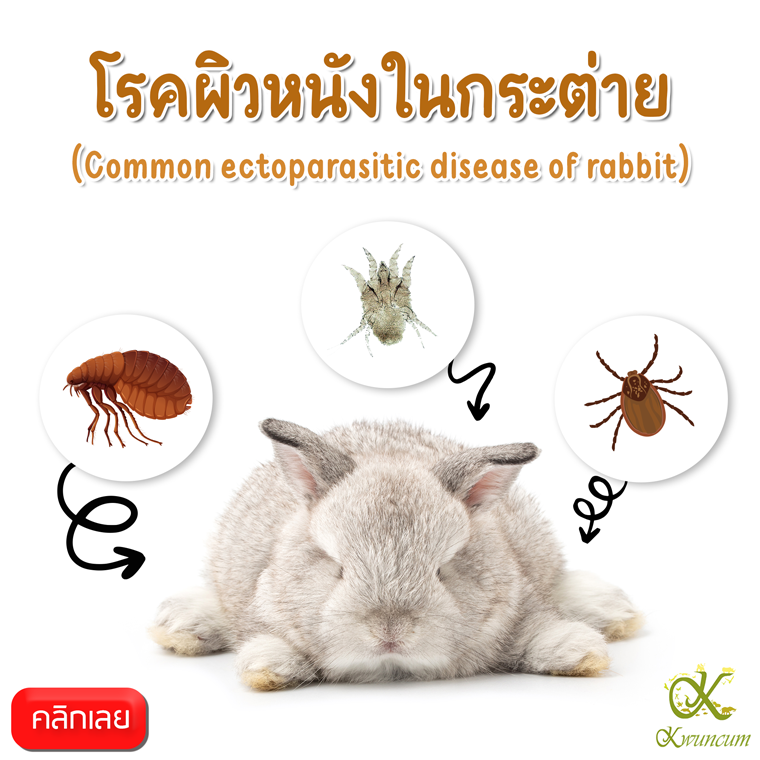
Skin Diseases in Rabbits
(Common Ectoparasitic Diseases of Rabbits)
By: Dr. Pawida Wiphusanti (Dr. Ming)
Skin diseases in rabbits can stem from various causes, including allergies, malnutrition, psychological factors, tumors, idiopathic (unknown) causes, or congenital conditions. However, the most commonly encountered causes are parasitic, fungal, and bacterial infections.
The clinical signs that most often concern owners and lead them to seek veterinary care are itching (pruritus) and hair loss (alopecia). These symptoms can be non-specific. Research surveys have shown that rabbits infected with external parasites range in age from as young as 4 weeks to 10 years old.
Ectoparasitic Skin Diseases
Common external parasites include fur mites, ear mites, and even cross-infections from dogs and cats.
1. Rabbit Fur Mites
Caused by Cheyletiella parasitovorax, also known as “walking dandruff.” * Symptoms: Itching, thinning hair, dry skin, or visible white dandruff scattered across the coat.
Note: Healthy rabbits should not typically have dandruff because they groom themselves constantly. If dandruff is observed, it may indicate mites.
Diagnosis: Veterinarians usually perform a skin scraping or a "clear tape impression" test to identify both the mites and their eggs under a microscope.
Figure 1: Rabbit showing hair loss and dandruff caused by fur mites. Figure 2: Skin scraping procedure.
2. Rabbit Ear Mites
Caused by Psoroptes cuniculi.
Symptoms: Thick crusts or scales on the outer ear canal, heavy earwax buildup, and inflammation.
Complications: In some cases, it leads to otitis externa (outer ear canal inflammation). If the infection perforates the tympanic membrane and moves into the middle or inner ear, the rabbit may exhibit neurological signs like a head tilt.
Resilience: These mites can survive in the environment for up to 21 days.
Figure 3: The ear mite Psoroptes cuniculi. Figure 4: A rabbit with thick crusting on the outer ear.
3. Sarcoptic Mange (Scabies)
Caused by Sarcoptes scabiei and Notoedres cati.
Symptoms: Intense itching and lesions typically found in areas with thin fur, such as the ears, around the eyes, mouth, and genital area. It causes dermatitis characterized by itchy papules (bumps) around the head, neck, and body.
Transmission: This is highly contagious and can spread to other mammals, including guinea pigs, ferrets, dogs, cats, and even humans.
Figure 5: Thickened skin on a rabbit's toes due to Sarcoptic mange.
4. Fleas
Rabbits living with dogs or cats may be exposed to various flea species.
Species: The rabbit flea (Spilopsyllus cuniculi), the dog flea (Ctenocephalides canis), and the cat flea (Ctenocephalides felis) can all be found on rabbits.
Figure 6: The rabbit flea Spilopsyllus cuniculi.
Treatment and Prevention
External parasites in rabbits are typically treated with medications in the Ivermectin, Selamectin, or Imidacloprid groups.
Veterinary Care: The choice of medication, dosage, and frequency depends on the veterinarian’s diagnosis and the severity of the symptoms.
Duration: Treatment generally lasts between 2 to 8 weeks.
Recommendations for Owners: If your rabbit exhibits any of the symptoms mentioned above, it is highly recommended to:
Consult a veterinarian immediately.
Isolate the affected rabbit from other rabbits.
Treat all other pets in the household with preventative medication to stop the spread of parasites.
Early intervention ensures a healthy coat and a happy bunny!
With best wishes from... Kwunkum Animal Hospital


