Encephalitozoon cuniculi in Rabbits
17677 Views |
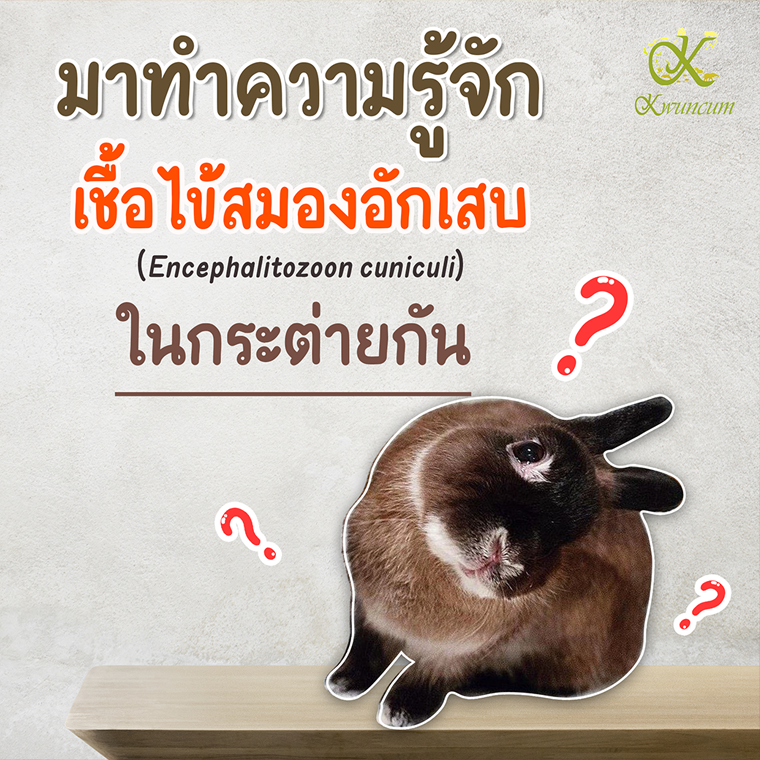
Encephalitozoon cuniculi in Rabbits
By Dr. Nilawan Thammasiri (Dr. New)
Encephalitozoon cuniculi (E. cuniculi) is a protozoan parasite that causes significant neurological diseases in rabbits. Furthermore, it can infect other mammals, including immunocompromised humans.
Infections with E. cuniculi are mostly opportunistic. The parasite typically enters the body through the ingestion of spores contaminated in food, water, or the environment via the urine of infected rabbits (Horizontal transmission). It can also be transmitted from a mother rabbit to her offspring (Transplacental transmission).
Clinical Symptoms
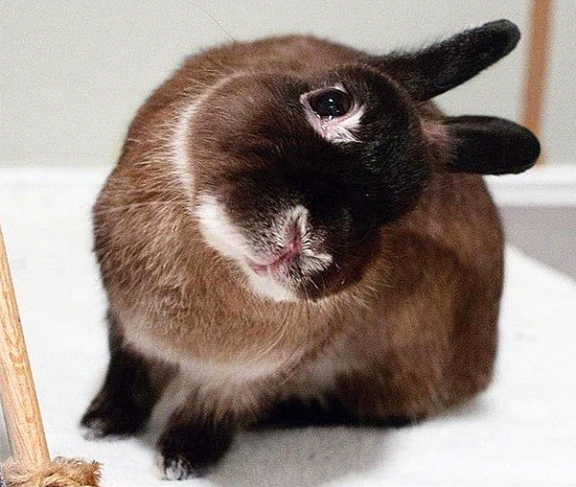
Neurological Symptoms: Such as head tilt, ataxia (loss of coordination), circling, seizures, and paresis (partial paralysis).
Symptoms Related to Other Systems: These include signs of renal failure (kidney failure) such as polydipsia (excessive thirst), polyuria (excessive urination), pollakiuria (frequent urination), granulomatous uveitis (eye inflammation), and weight loss.
The aforementioned symptoms may appear in a single system or multiple systems simultaneously. Most rabbits with a strong immune system do not exhibit clinical signs. However, if a rabbit experiences stress, a weakened immune system, an unsuitable environment, or malnutrition, the disease may manifest.
Once infected, rabbits can shed spores in their urine during the first 1-2 weeks. The parasite can remain in the body for 3-5 weeks and persist in the environment for up to 4 weeks after being shed. The clinical severity depends on the quantity of spores the rabbit has ingested.
Figure 1: Head tilt in a rabbit infected with E. cuniculi (1)
Figure 2: Granulomatous uveitis in a rabbit infected with E. cuniculi (1)
Figure 3: Ataxia in a rabbit infected with E. cuniculi (2)
Diagnosis
Evaluation of clinical symptoms.
Detection of the parasite in urine using Polymerase Chain Reaction (PCR) and Real-time PCR, typically conducted during the shedding period within the first 3 months.
Serological testing to detect antibody levels in the blood, such as Enzyme-linked Immunosorbent Assay (ELISA), Indirect Immunofluorescent Assay (IFA), and Carbon Immunoassay (CIA). These serological methods are highly accurate.
Currently, Kwankhum Animal Hospital can detect E. cuniculi in suspected rabbits using the ELISA method at our own specialized laboratory. Results are reported within 4-5 working days, allowing for timely diagnosis and treatment.
Treatment
Currently, antiprotozoal medications are used for treatment, administered orally for at least 3-4 weeks, alongside supportive care. Antibiotics may be prescribed to prevent secondary bacterial infections. Other treatments include anti-inflammatory drugs, pain relievers, fluid therapy, and symptomatic treatments such as eye drops or nutritional supplements for rabbits with a decreased appetite.
The prognosis depends on the severity of the clinical signs. If neurological symptoms or a head tilt are present, these conditions may persist and not fully resolve even after treatment due to organ damage. In severe cases, the disease can be fatal, especially if complicated by other conditions like kidney failure or gastrointestinal stasis.
If your rabbit shows even minor abnormalities as described above, it is recommended to consult a veterinarian immediately for prompt diagnosis and treatment. This disease can be successfully managed if caught in time.
References
(1) https://www.wikiwand.com/en/Encephalitozoon_cuniculi (2) https://actavetscand.biomedcentral.com

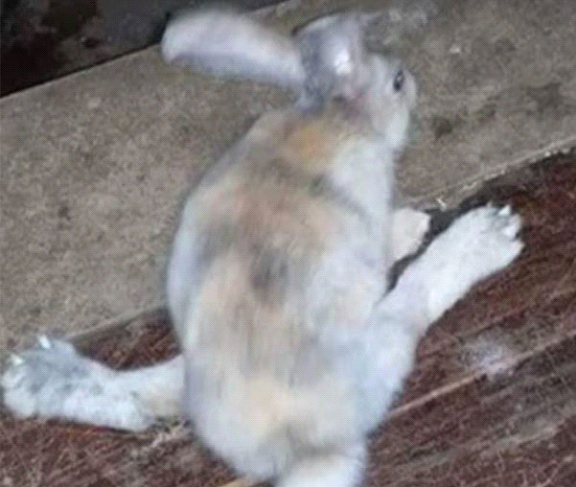
รูปที่ 3. ภาวะกล้ามเนื้อเสียสหการ (Ataxia) ในกระต่ายที่ติดเชื้อ E.cuniculi (2)


