Why Is Therapeutic Food Becoming Popular Among Rabbit Owners?
6908 Views |

Why Is Therapeutic Food Becoming Popular Among Rabbit Owners?
By Asst. Prof. Dr. Somphoth Weerakul (Dr. Kaew)
A deep dive into what rabbit veterinarians must understand and what health-conscious owners need to keep up with.
In today’s world, it isn’t just humans who are seeking a better quality of life through improved environment and nutrition; everyone wants better health. This global wellness trend has extended to our pets. More people are paying closer attention to their "best friends" at home. Even government animal welfare systems have evolved, with some countries, like Australia, implementing laws that require owners to take their pets for walks for their physical and mental well-being. The result? Not only do the animals benefit, but the owners gain even more from these outdoor activities.
The shift in food selection now focuses on quality, highly specific nutritional requirements, adequate energy levels, and supplements that provide functional health benefits.
Some eat to prevent, while others eat to treat. It depends on how well one understands their health and how early they choose to care. Ultimately, eating for prevention is far better than waiting until we fall ill.
Why is therapeutic food gaining popularity, even for pets?
Let’s focus on rabbits first. Their digestive systems are complex and often misunderstood. While owners are striving to provide better care, veterinarians play a crucial role in creating the right understanding and offering appropriate recommendations.
Proper nutrition reduces the risk of diseases caused by digestive issues, nutrient deficiencies, overnutrition, or toxins. It ensures the animal receives energy from the right sources specific to their species.
Growth and Fermentation: In growing bunnies, the fermentation system must develop rapidly. Selecting the right ingredients for fermentation is vital to stimulate the synthesis of Propionic acid. This acid helps create amino acids—the protein source needed for body development. The remaining byproducts are Acetic or Butyric acids. Foods or grasses with high starch concentrations produce excessive butyric acid, which reduces gastrointestinal motility, leading to GI stasis and enteritis in young rabbits.
The Fiber Standard: A standard rabbit diet must first control various types of fiber: Pectin, Hemicellulose, Cellulose, and Lignin. Many leading brands in Thailand and abroad strive for a Crude Fiber level exceeding 20%, believing this level stimulates gut motility.
The Mechanism of "Therapeutic" Food: The body relies on indigestible fibers to stimulate the autonomic nervous system of the large intestine, known as the Fusus Coli. Therefore, truly superior food depends on the specific proportions of those four fiber types. Knowing which type acts as a fermentation source, which forms the cecotropes (soft pellets), and which stimulates the intestinal nervous system is what defines "therapeutic food" beyond just basic crude fiber.
Evolving Mineral Needs: Vitamin and mineral requirements change with age. In the past, rabbit food strictly limited calcium for fear of cloudy urine (Hypercalciuria) and bladder stones (Urolithiasis). However, this often led to Osteopenia (low bone mass) in adult rabbits, resulting in Vertebral Compression, mobility issues in old age, and poor dental development—ultimately shortening their lifespan. Today’s "New Era" of rabbit food adjusts mineral balances more accurately, solving the nutritional mistakes of the past.
Immune Support via Probiotics: Good nutrition helps build immunity through probiotics. Beyond beneficial microbes protecting the gut and eliminating pathogens, certain strains stimulate the production of IgM, IgG, and especially IgA. For instance, Bifidobacterium (Park and Kim, 2002) can trigger these immunoglobulins from the Mesenteric Lymph Nodes (MLN) and Peyer’s Patches.
The Role of Natural Extracts: Natural supplements are becoming just as important. Since captive pets cannot forage in the wild, they miss out on beneficial herbs. Plant extracts like Flavonoids, Glycosides, and Alkaloids are increasingly recognized for their roles as antioxidants, anti-aging agents, and anti-cancer support. They also help reduce pain, boost immunity, and nourish vital organs like the liver, kidneys, and the cardiovascular system. We cannot deny that these are the essential "medical texts" and supplements of the modern day.
The Conclusion
This is why attentive rabbit owners are pivoting from standard diets to therapeutic food groups. At the end of the day, health value is the ultimate goal for both us and our pets.
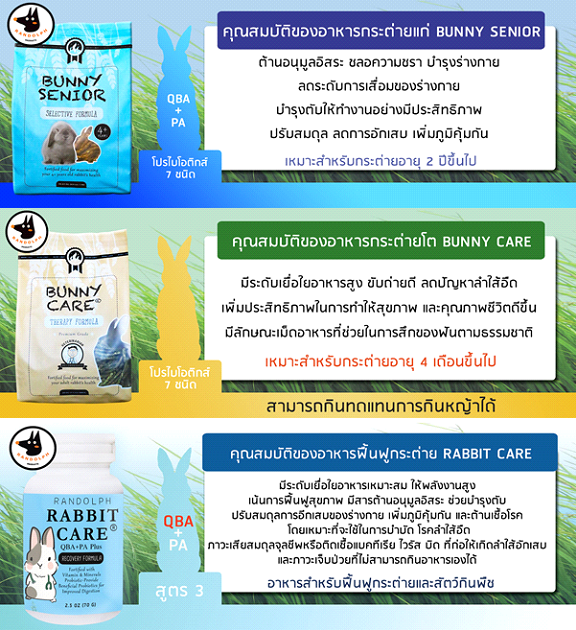
Examples of products that fall into the therapeutic category include the Randolph range:
RANDOLPH BUNNY SENIOR and BUNNY CARE
Recovery foods like RABBIT CARE (QBA+PA Plus formula)
We believe that in the near future, more products of this type will be developed to meet the growing demand for pet health and longevity.