Heat Stroke in Rabbits
51330 Views |
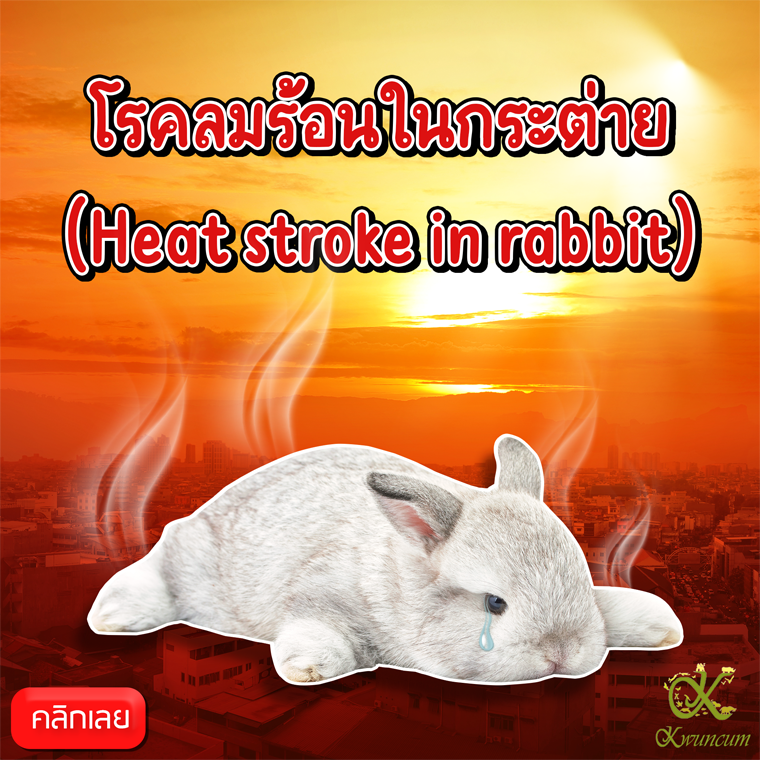
Heat Stroke in Rabbits
By Jirakan Wongwit, DVM (Dr. Fang-Khao)
Heat stroke, or what veterinarians formally refer to as hyperthermia, is a critical emergency frequently encountered in Thailand—a land known for being hot, hotter, and hottest!
The reason rabbits tolerate heat less effectively than other animals is rooted in their nature; they are burrowing animals that traditionally live in environments with stable temperatures. This differs significantly from pet rabbits kept in spaces designated by their owners. Crucially, rabbits dissipate heat primarily through breathing, as they lack sweat glands. You may occasionally notice clear droplets on their nose; this is a fluid produced to increase the efficiency of evaporative cooling as they breathe. Additionally, a rabbit's ears are the area with the least fur and the most blood vessels, making vasodilation (expanding blood vessels) in the ears a primary method for shedding heat.
Defining Heat Stroke
Heat stroke in rabbits occurs when the body temperature exceeds 104°F (40°C). At this point, the body's cooling mechanisms fail, and the thermoregulatory center stops functioning. This leads to thermal damage to various internal tissues and can be fatal if not corrected quickly. The lungs are often the first major organ to suffer, as they are central to the respiratory cooling process. Consequently, rabbits that survive heat stroke often suffer from lingering respiratory issues.
Risk Factors for Heat Stroke
Extreme Heat and High Humidity: Especially during Thailand's summer months (March to May).
Pre-existing Conditions: Specifically respiratory diseases, which hinder the rabbit's main cooling system.
History of Heat Stroke: Rabbits that have suffered from it before are more susceptible.
Physical Condition: Being overweight/obese, or having long/thick fur.
Breed: Breeds like the Netherland Dwarf (with short ears) and the Holland Lop (with floppy ears) are at higher risk than breeds with large, upright ears.
Prevention Tips
Keep pets in open areas with good ventilation or provide shade if they are outdoors.
Always provide fresh water or mist water onto their vegetables if they are not big drinkers.
Use flooring that conducts cold easily, such as marble tiles or a terracotta "cool house" filled with ice.
Regularly groom and trim the rabbit’s fur.
Observe closely: As prey animals, rabbits hide their symptoms. Early detection saves lives. Look for unusually red ears, lack of urination, lethargy, loss of appetite, or rapid "nose-flaring" breathing.
Signs and Symptoms of Heat Stroke
Behavioral Changes: Lethargy and loss of appetite are often the first signs of any illness. Never overlook them.
Respiratory Distress: Loud breathing, panting, flared nostrils, or "thumping" chest/abdominal movements. Open-mouth breathing is a severe warning sign.
Neurological Signs: Weakness in the legs, loss of balance, trembling, or seizures. these indicate that the brain—the body's control center—is severely damaged.
Hypersalivation (Drooling): A wet chin may look like dental disease (malocclusion), but in rare cases of heat stroke, rabbits droof as a last resort to dissipate heat through moisture.
GI Stasis: No droppings or changes in stool size/shape. This is a common side effect where the digestive system slows down due to stress and dehydration.
Emergency First Aid: What to do?
While seeing a vet is the best answer, if you are far away, you must perform an immediate emergency cool-down.
Caution: Do not cool the rabbit down too fast, or they may go into shock from hypothermia (dangerously low body temperature).
Step-by-Step Procedure:
Step 1: Move the pet out of the hot area immediately.
Step 2: Dissipate heat using these methods:
Conduction: Place a cold pack or ice wrapped in a cloth against the rabbit's groin/armpits, or use a cotton ball soaked in warm water to wipe the ears (this encourages blood vessels to dilate and release heat).
Convection: Wipe the ears with a cotton ball soaked in rubbing alcohol; it evaporates quickly and helps pull heat from the many blood vessels in the ears.
Hydration/Urination: If the rabbit is conscious, offer water. If they aren't urinating, a vet may need to induce urination to help the body expel "hot" waste products.
Step 3: Monitor Rectal Temperature throughout the process to ensure you don't over-cool them.
Step 4: Rush to the veterinarian as soon as possible.
Veterinary Treatment
Treatment varies based on the individual case and the vet's discretion. Generally, the process includes:
Controlled body temperature reduction.
Oxygen therapy to assist breathing.
IV or Subcutaneous fluids for rehydration.
Blood tests to evaluate organ function (especially the liver).
X-rays to assess internal damage.
Medication: This may include sedatives, anti-inflammatories, antibiotics, or GI stimulants.
Early diagnosis is the key to survival. The faster the temperature is stabilized, the less damage occurs to the vital systems. Post-recovery care is also essential to supplement functions that may have been temporarily impaired during the crisis.


