Sugar Glider Basics
15974 Views |
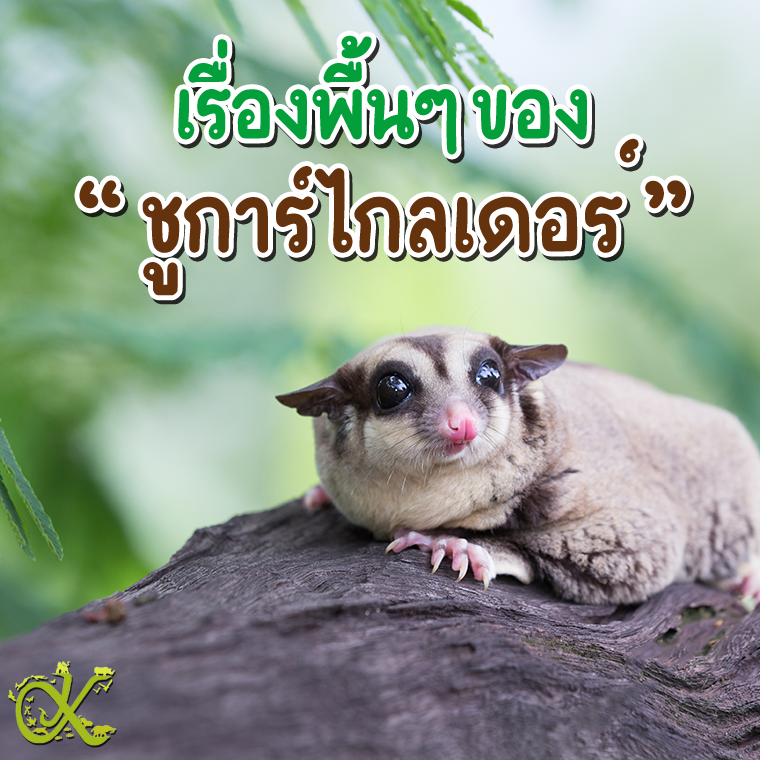
Sugar Glider Basics
By Dr. Kaew (Asst. Prof. Dr. Sompoth Weerakul)
There are various ways to raise a Sugar Glider, each with its own pros and cons. To choose the best method, one must rely on a fundamental management principle: Biological Data, or the "basics" of the animal.
Biological Profile
Sugar Gliders are marsupials (mammals with a pouch for raising young), belonging to the same group as Koalas and Kangaroos. Native to Australia and New Guinea, they are social animals that live in colonies of about 6–10 individuals.
Each colony maintains a clear territory. The male leader (alpha) defines the colony's boundaries by marking them with a unique scent. Males are generally larger than females, weighing 100–160g compared to the females' 80–130g. Their body length ranges from 160–210 mm, with a tail length of approximately 165–210 mm.
A unique feature is the gliding membrane or patagium, a thin skin fold extending from the sides of the body between the front and hind legs. Combined with small, lightweight bones, this allows them to glide effortlessly through the air.
Reproduction and Development
Sugar Gliders are "polyestrous," meaning they can go into heat multiple times during the breeding season. In Australia, this occurs between June and November. In Thailand, breeding is most frequent during the transition from summer to the rainy season, when insects—a rich food source—are abundant.
Estrus Cycle: 29 days.
Gestation: Only 15–17 days (sometimes as short as 13 days).
The Pouch: After birth, the tiny joeys crawl into the mother’s pouch, which contains four teats. They remain in the pouch for 70–74 days.
Weaning: Joeys emerge from the pouch and begin weaning at 110–120 days old. However, they stay with their mother until they are 8–12 months (females) or 12–15 months (males).
A unique anatomical fact: Females have a dual reproductive system (two vaginas and two uteri), and males have a bifurcated (forked) penis. Interestingly, males do not urinate through the tip of the penis, but from the upper part of the base.
Diet and Digestion
Sugar Gliders are omnivores. In their natural habitat, they are nocturnal and have a specialized diet that can be difficult to replicate in urban settings. They primarily consume the sap or nectar of Acacia and Eucalyptus trees. Since these are high in carbohydrates and fiber, Sugar Gliders have an enlarged cecum (appendix) where microbes ferment food to create high-quality nutrients. Their lower incisors are sharp and strong, specifically designed to strip tree bark.
They also enjoy floral nectar, fruits, and honey. During seasons of plenty, they prioritize insects to gain the high protein and fat needed to store energy for leaner times. In the wild, they are incredibly active and require high energy—about 182–229 kJ per day, or roughly 17% of their body weight in food daily.
Note for Pet Owners: Captive gliders typically require less energy because they lack the grueling physical activity of the wild. Overfeeding can easily lead to obesity. While grains are not part of their natural diet, organic processed grains (like cereal) can be provided in small amounts.
Habitat and Care Management
Socialization and Housing
Sugar Gliders need at least 2 hours of close attention daily to bond with their owners. With proper socialization, they can become incredibly tame and intelligent.
Cage Size: The cage should be as large as possible to allow for gliding and exercise. The minimum recommended size is 91 x 36 x 91 cm.
Environment: Use a well-ventilated wire cage.
Temperature: They thrive between 18–32°C, but the ideal range is 24–27°C.
Essentials: The cage must include food/water trays and a high-hanging "hide box" (at least 13 x 13 cm) for security. Bedding (newspaper, thick tissue, or dried leaves) should be cleaned every 1–2 weeks.
Enrichment: Provide branches for climbing and gnawing (which helps wear down teeth) and bird toys to prevent boredom.
Nutrition in Captivity
A balanced diet should be high in protein. While some owners use insects as a staple, other protein sources include eggs, pinky mice, or high-quality cat food (though eggs are the most common in zoo settings). This should be supplemented with high-carbohydrate sources like nectar, honey, or Eucalyptus/Acacia sap.
Commercial Diets: Insectivore bird food can be used as a supplement (about 24% of the diet).
Grains: While not natural, processed "organic" grains like Cerelac or Neonate can be offered.
Fruits/Vegetables: These should be limited, as they are a small part of their natural diet. While Thailand has an abundance of sweet fruits (providing good fructose), a diet consisting primarily of fruit is low in protein and calcium, leading to Metabolic Bone Disease (MBD) and dental issues.
The "Leadbeater’s Mixture": The most widely accepted diet is based on the "Leadbeater’s Possum" (a close relative) formula. It is typically mixed 50/50 with a high-quality insectivore or carnivore diet.
Important: Treats (dried meat, insects, dried fruit, honeycomb) should make up less than 5% of their total intake.


