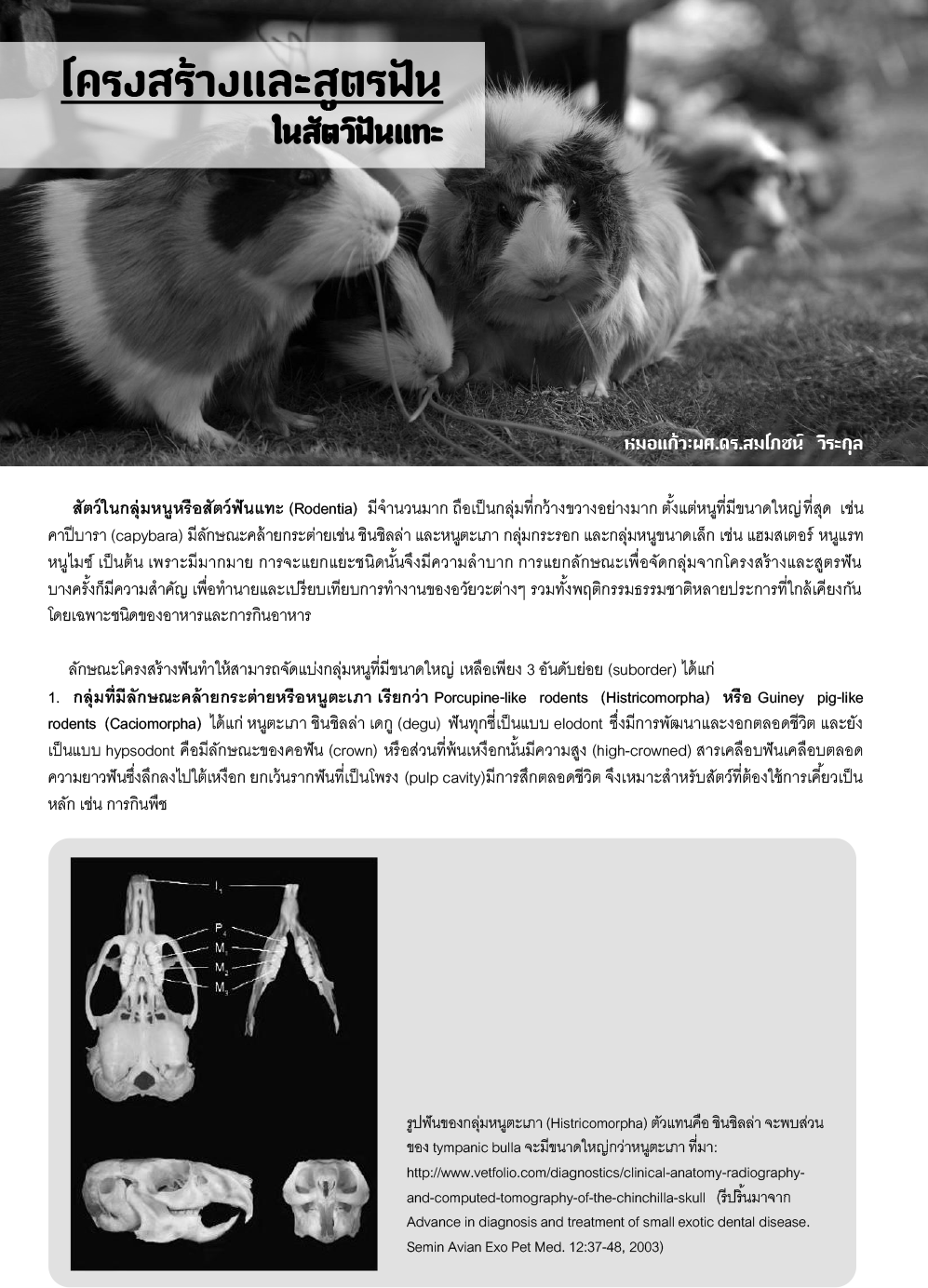
Dental Structure and Dental Formulas in Rodents
5713 Views |

Dental Structure and Dental Formulas in Rodents
Author: Dr. Kaew (Asst. Prof. Dr. Sompoth Weerakul)
In rodents, their dental characteristics and structures are unique and specifically adapted for gnawing. Here are the key details:
1. General Dental Structure
Incisors: Rodents have a single pair of upper and lower incisors that grow continuously throughout their lives (Aradicular Hypsodont). The front surface is covered with hard enamel (often orange-colored due to iron minerals in some species), while the back is softer dentin. This uneven wear creates a self-sharpening "chisel-like" edge.
Diastema: There is a distinct gap between the incisors and the cheek teeth (premolars/molars) where canines would normally be. This space allows them to pull their cheeks inward to seal off the mouth while gnawing on non-food items, preventing debris from being swallowed.
Cheek Teeth (Premolars & Molars): Used for grinding food. Depending on the species, these may be either:
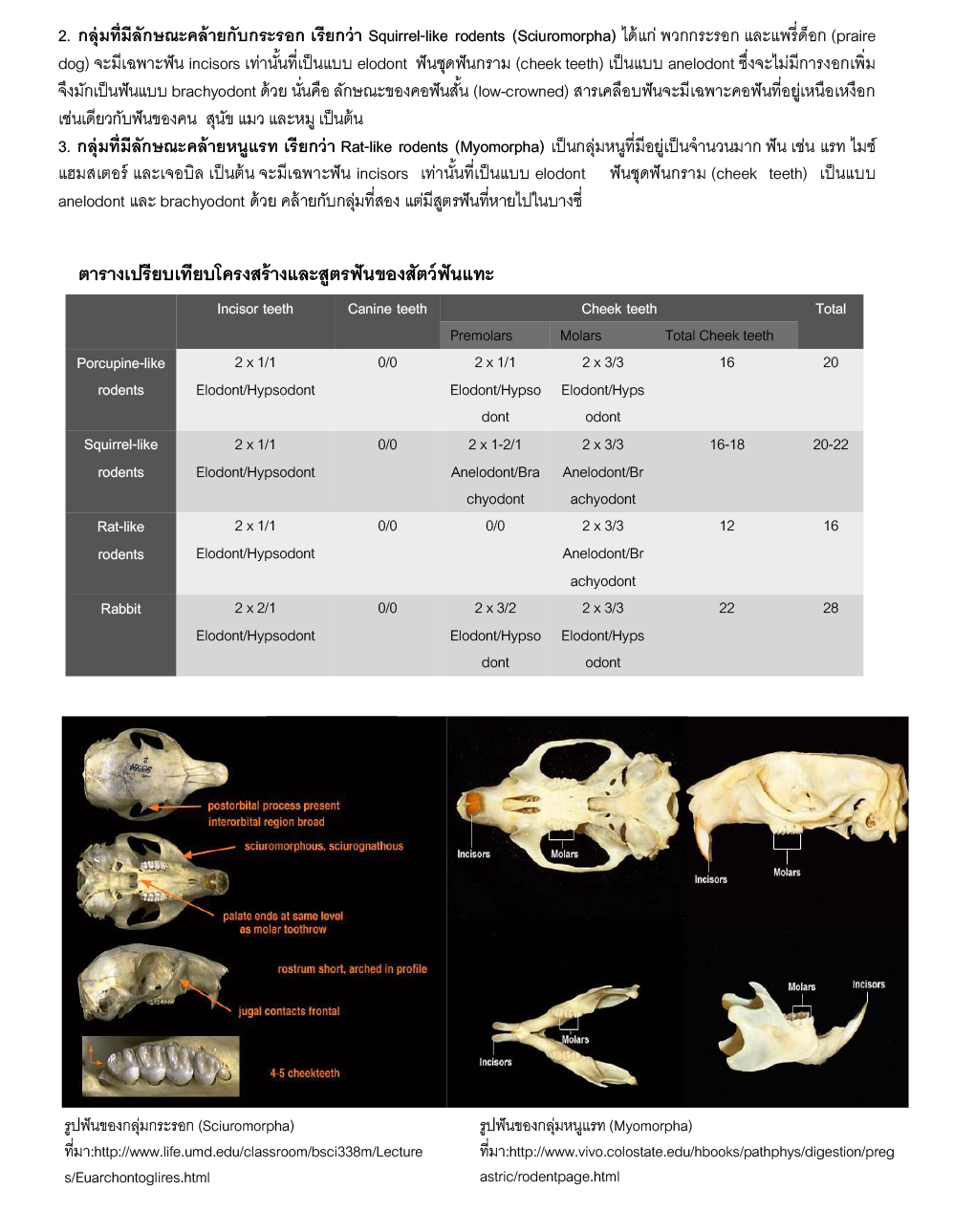
Brachyodont: Fixed length (do not grow back, e.g., rats/mice).
Hypsodont: Continuously growing (e.g., guinea pigs, chinchillas).
2. Dental Formulas
The dental formula represents the number of teeth on one side of the upper (U) and lower (L) jaw. (Total teeth = sum of formula x 2)
Rats, Mice, and Hamsters (Murids/Cricetids):
Formula: I 1/1, C 0/0, P 0/0, M 3/3
Total: 16 teeth
Note: They have no premolars.
Guinea Pigs and Chinchillas (Caviomorphs):
Formula: I 1/1, C 0/0, P 1/1, M 3/3
Total: 20 teeth
Note: All teeth (including molars) grow continuously.
Squirrels (Sciurids):
Formula: I 1/1, C 0/0, P 1-2/1, M 3/3
Total: 20–22 teeth
Prairie Dogs:
Formula: I 1/1, C 0/0, P 2/1, M 3/3
Total: 22 teeth
3. Clinical Significance
Because many rodent species have "open-rooted" teeth that never stop growing, they require a diet high in fiber (like hay) to naturally wear down their teeth. If the teeth are not worn down properly, it leads to Malocclusion (misalignment), which can cause oral trauma, abscesses, and the inability to eat.
โครงสร้างและสูตรฟัน ในสัตว์ฟันแทะ
หมอแก้ว: ผศ.น.สพ.ดร. สมโภชน์ วีระกุล