Essential Guide to Starting Your Journey with Hedgehogs
81758 Views |
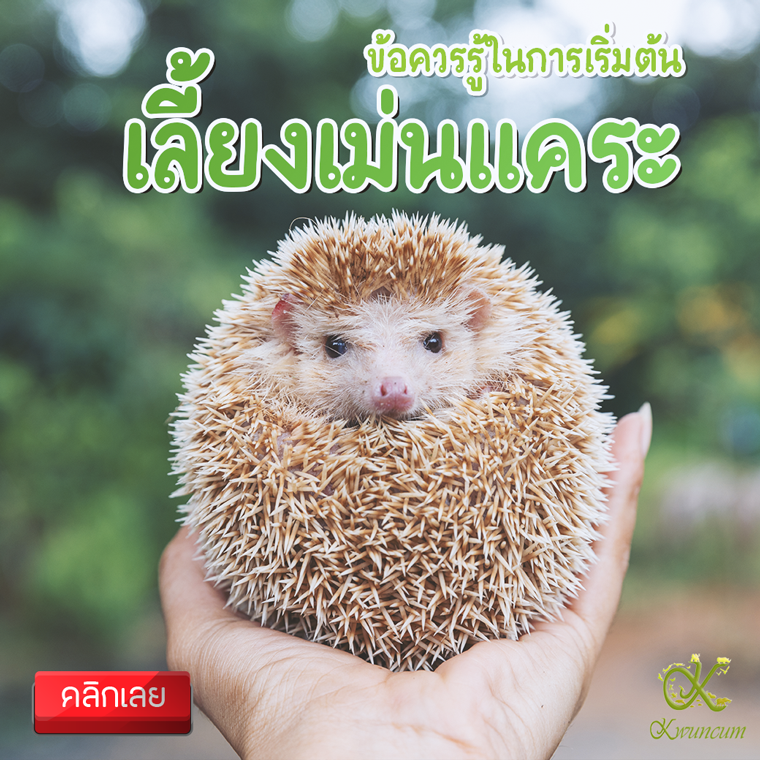
Essential Guide to Starting Your Journey with Hedgehogs
By Dr. Giggag: Sarocha Sukarinprom, DVM (Baanlanglek Pet Clinic, Hathairat)
“Hedgehogs have been popular pets in Thailand for some time now due to their affordable price. Consequently, we see them quite often at the clinic. However, when speaking with owners, I’ve found that many still have misconceptions about their care. In this section, I’d like to discuss how to prepare yourself if you're thinking about bringing a little hedgehog home.”
Step 1: Research and Get to Know Them
The most popular breed in Thailand is the African Pygmy Hedgehog (Atelerix albiventris). They are insectivores and naturally solitary, territorial animals.
Behavior: They are nocturnal, so expect them to be a bit noisy while you sleep. In the wild, they can travel 5–10 kilometers a night. They are curious by nature and love to burrow and climb.
Defense Mechanism: When disturbed, they curl into a ball of spines. Their quills can fall out naturally, but they don't "shoot" them at people, so don't be afraid!
Self-Anointing: They have a unique behavior called "anointing" or "anting." They will take a new object or scent into their mouth, create a frothy saliva, and smear it onto the spines on their back. (No, they don't have rabies!)
Lifespan: Usually 5–7 years, but with excellent care, they can reach up to 10 years.
Socializing: If keeping more than one, beware of fighting. Males and females should be separated from the age of 2 months onwards.
Step 2: Housing and Equipment
Your hedgehog’s home should be a box or enclosure with a secure lid and excellent ventilation—these little guys are master escape artists!
Safety: Avoid wire flooring or cages with rungs that could cause broken legs.
Bedding: Wood shavings are popular, but dust can cause respiratory irritation in some hedgehogs. Alternatives like corn cob bedding are great options. Be sure to scoop out soiled bedding daily to prevent odors.
Toys: A running wheel is essential for exercise. Without it, they tend to just eat and sleep, leading to obesity. While a "chunky" hedgehog is cute, it’s dangerous for their health (after all, none of us want to be overweight either, right?).
Shelter: Simple toys like toilet paper rolls are great, but a dedicated shelter (hidey-house) is a must. This can be a simple sleeping spot or a more complex design for climbing.
Step 3: Nutrition
Feed them high-protein, low-fat kibble. Small-bite cat food is highly recommended.
Supplements: Add insects like 5–6 mealworms or 1–2 crickets per day (too many will cause weight gain).
Fiber: You can offer sweet fruits or vegetables for added fiber and vitamins, though some picky eaters might refuse them.
Step 4: Environment
Hedgehogs need a dry, low-humidity, and warm environment.
Location: Avoid keeping them in bathrooms, as the high humidity can lead to respiratory diseases.
Temperature Control: In the summer, ensure good ventilation. You can tell a hedgehog is hot if they "sploot" (lying flat on their belly like a grilled chicken).
Winter Care: In cold weather, they will try to build a warm nest by piling bedding at their door. In this case, you should provide a heater to prevent torpor (a dangerous hibernation-like state). If left in torpor for too long, it can be fatal.
Step 5: Hygiene and Maintenance
Cleaning: Change the bedding 1–2 times a week to prevent external parasites. Check their nails regularly and trim them if they get too long.
Bathing: Give them a warm bath once a month using diluted small-animal shampoo. Always dry them thoroughly.
Swimming: If you want your hedgehog to swim, introduce them to water gradually—not every hedgehog is a natural swimmer! Note that water often stimulates their bowels, so don't be surprised if they poop more than usual during a bath.
Final Thoughts
Whether it’s a hedgehog or any other animal, the principles are similar. Beyond the basics mentioned above, owners should study the species thoroughly and assess their own readiness. They aren't just with us for a month or two; they are a commitment for 5 to 10 years. During this time, they depend entirely on us.
Remember: A pet is a responsibility, not a disposable toy.


