When a Little Bunny Has Diarrhea and a Messy Bottom!
2038 Views |
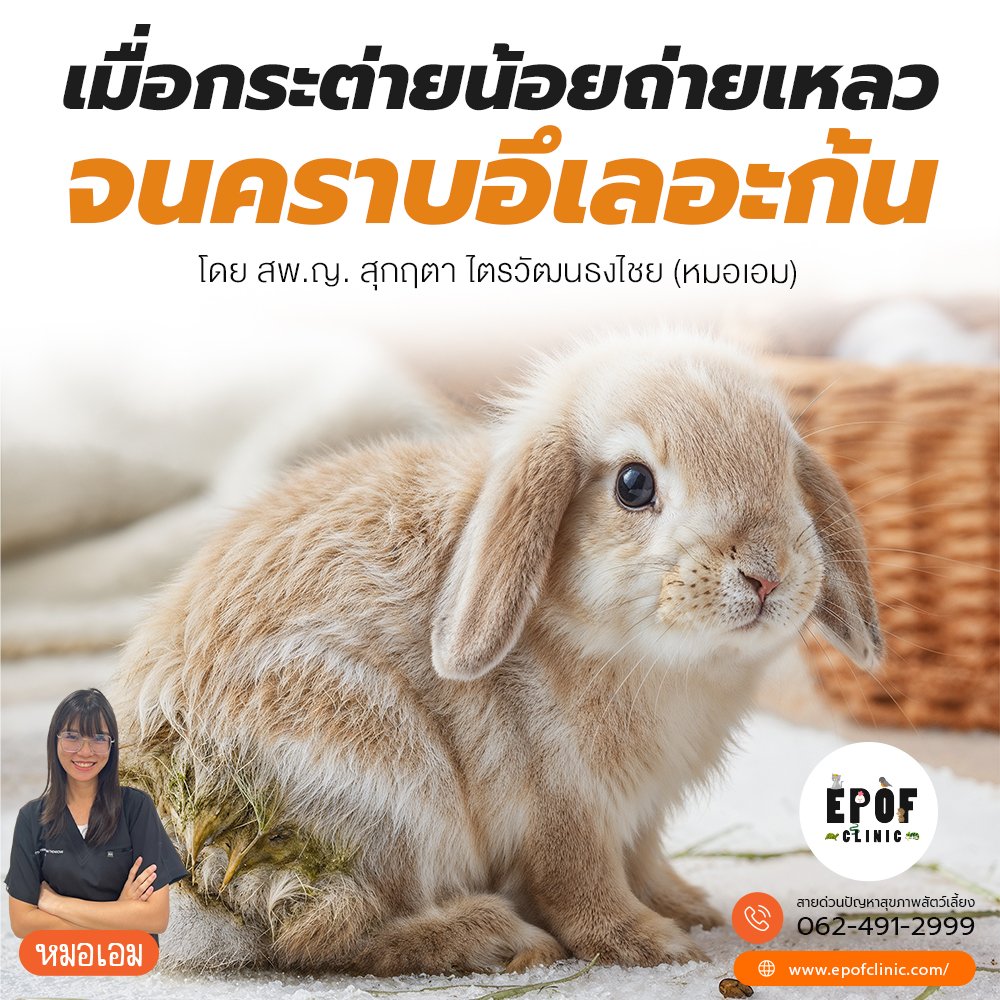
“When a Little Bunny Has Diarrhea and a Messy Bottom!” By Dr. Sukrita Triwattanathongchai, DVM (Dr. Aim)
"Doctor, the little bunny I just adopted is lethargic, not eating, and has diarrhea with poop stains all over its bottom. What should I do?"
If your rabbit is showing these symptoms, please take them to see a vet immediately. Diarrhea is an emergency condition that may be caused by a dangerous protozoa called Eimeria (Coccidiosis in Rabbits).
What is Coccidiosis? Let's get to know this tiny threat.
Coccidiosis is a protozoal infection caused by the genus Eimeria, which specifically affects a rabbit's digestive system. It is most commonly found in young or weaning rabbits (4-16 weeks old), though it can also occur in adults.
Important Strains:
Eimeria stiedae: Causes hepatic coccidiosis (liver coccidiosis).
Eimeria intestinalis, E. magna, E. media, E. perforans: Cause intestinal coccidiosis, which is the group that typically causes diarrhea in young rabbits.
Transmission and Pathogenesis
Transmission: The infection spreads when a rabbit ingests the infective stage of the parasite, called an oocyst, from a contaminated environment (such as food, water, or the feces of an infected rabbit). Oocysts can survive in the environment for a long time and are highly resistant to many disinfectants.
Pathogenesis: After a rabbit ingests an oocyst, it releases sporozoites into the small intestine. These then invade the intestinal lining and multiply, destroying the epithelial cells. This causes inflammation and abnormal, excessive mucus secretion.
Clinical Signs
Symptoms vary depending on the type and severity of the infection.
1. Intestinal Coccidiosis
Diarrhea, possibly mixed with mucus or blood.
Bloating, loss of appetite, lethargy, and weight loss.
Rough coat and easily shed fur.
In severe cases, it can lead to shock from dehydration, seizures from hypoglycemia (low blood sugar), and death.
2. Hepatic Coccidiosis
Lethargy, loss of appetite, and pale mucous membranes.
Swollen abdomen and enlarged liver.
In chronic cases, jaundice (icterus) may be observed.
Diagnosis
Intestinal Coccidiosis: Typically diagnosed via a fecal examination to look for Eimeria spp. oocysts.
Hepatic Coccidiosis: Harder to diagnose. Vets generally use blood tests to evaluate liver values, or they may consider a tissue biopsy from the intestines or liver for a pathological examination.
Treatment
Administration of Sulfonamide drugs, such as sulfa-trimethoprim, continuously for 7-14 days.
Providing fluid therapy and high-energy nutritional supplements to prevent malnutrition and dehydration.
Isolation: Most importantly, sick rabbits must be separated from the group immediately to reduce the spread of oocysts.
Prevention and Control
Maintain strict cleanliness of cages and feeding equipment.
Clean the litter tray daily to reduce oocyst accumulation. Note: Only concentrated ammonia can effectively destroy these oocysts; general household disinfectants will not work.
Avoid overcrowding and minimize stress during the weaning period.
References
Pakandl, M. (2009). Coccidia of rabbit: a review. Folia Parasitologica, 56(3), 153–166.
Coudert, P., Licois, D., & Drouet-Viard, F. (1995). Eimeria species and strains of rabbits. In: Eckert J. et al. (eds.) Biotechnology: Guidelines on Techniques in Coccidiosis Research. European Commission.
Licois, D. (2004). Domestic rabbit coccidiosis: a review. World Rabbit Science, 12(2), 69–74. Avian & Wildlife Biology, 3(5), 352–353. https://doi.org/10.15406/ijawb.2018.03.00137


