How to Raise Sulcata Tortoises to Prevent Bladder Stones
5613 Views |
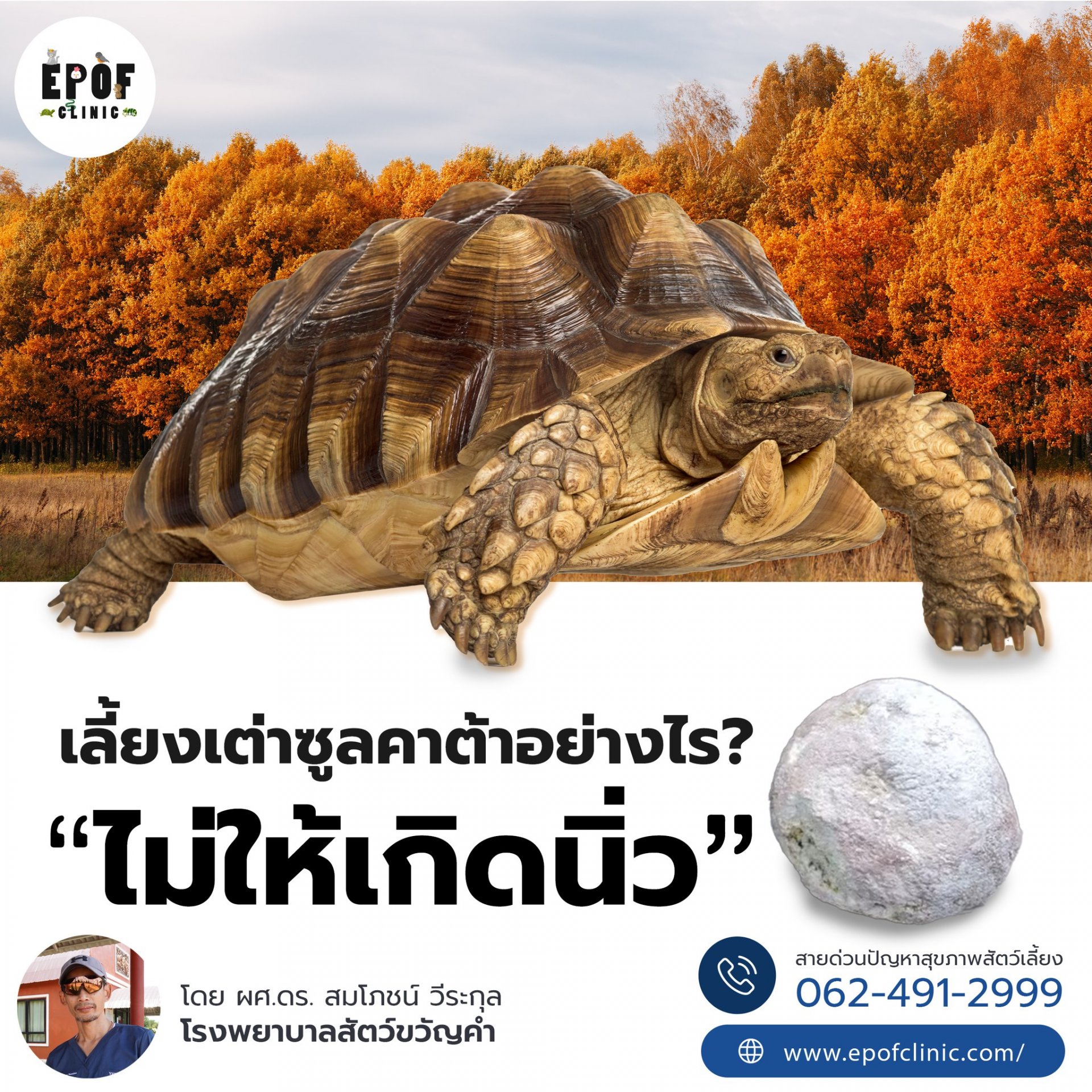
How to Raise Sulcata Tortoises to Prevent Bladder Stones
Written by: Asst. Prof. Dr. Somphoth Weerakul (Mor Kaew)
There are four key points we need to understand regarding this issue:
What type of stones do Sulcata tortoises develop?
How do these stones form?
How can we identify them, and what are the clinical signs?
How can we prevent them (i.e., how to raise them stone-free)?
Point 1: The Type of Stone
For a long time, the most common type of stone found in this tortoise species was misunderstood to be Urate stones, caused by uric acid accumulation, high-protein diets, or kidney disease (which typically leads to Gout). However, the stones found in Sulcatas are not significantly related to urates or uric acid. In fact, the symptoms do not align with urate stones at all. Instead, they are related to a type of stone called "Calcium Oxalate."
Sulcata tortoises are primarily at risk for this specific type of stone, which can be found in tortoises as young as 2 months old. It is considered much more common in Sulcatas than in other species. While oxalate can also bind with magnesium, sodium, and potassium to form crystals or stones, these are far less common than calcium oxalate.
Point 2: How Do Calcium Oxalate Stones Form?
These stones are rare in other tortoise species but highly prevalent in Sulcatas, even under similar risk factors. There are two main contributing factors: Diet and Water Intake.
Dietary Risks: Diets consisting of plants that accumulate high levels of oxalic acid, such as succulent vegetables, young leaf shoots, flowers, young plants, and many types of fruit.
Water Intake: Sulcatas are arid-dwelling tortoises that primarily obtain water through their food (known as preformed water) rather than direct drinking (free water). Because they naturally consume little water, their ability to flush out oxalic acid and calcium oxalate crystals is diminished. This leads to a higher accumulation of these crystals compared to animals that drink more or eat water-rich plants.
The Formation Process: When a Sulcata regularly consumes oxalic acid from vegetables or young plants, the acid accumulates and binds with calcium in the body to form crystals or stones. These can be found in the digestive tract (called "Gastroenteroliths") or the urinary system, including the kidneys and bladder (called "Uroliths").
This process directly impacts the body's calcium levels. The formation of stones "steals" calcium, causing a deficiency that forces the body to pull calcium from the bones. In adults, this often results in a soft shell (particularly visible on the plastron/belly) and shell deformities. In young tortoises, it leads to stunting and incomplete shell development.
Point 3: Identifying the Symptoms
When stones grow large, they compress both the abdominal and thoracic cavities. This causes the tortoise to have difficulty breathing; you may see them stretching their necks, spreading their legs, or lifting their bodies to gasp for air. This is a frequent symptom and is often misdiagnosed as a respiratory infection.
However, the most common reasons owners bring them to the vet are loss of appetite and constipation (not defecating or straining to do so). Other signs include lethargy, stunting, and a softening or deforming of the shell—even if the shell was previously hard and healthy. Note that these symptoms are distinct from those associated with urate stones or gout.
Point 4: Prevention Strategies
To prevent stones, we must address the risk factors mentioned in Point 2.
Dietary Adjustments:
Avoid prolonged feeding of young vegetables and shoots. These contain high levels of oxalic acid.
Rotate with mature plants. Older plants have lower oxalic acid levels and higher fiber, which stimulates bowel movements. Use mature leaves and grass (not young shoots).
The "One Day" Rule: Limit heavy vegetable feeding to only one day a week.
Use Formulated Hays: Mix vegetables with specialized hay products like TIMOTHY MEAL (RANDOLPH) to increase fiber, vitamins, and minerals while diluting oxalic acid. On other days, focus on grass and mature leaves.
Pelleted Food: If growth is unsatisfactory due to a reduced-vegetable diet (low indigestible fiber), supplement with high-fiber pellets (around 27% fiber is ideal) made primarily from grass to provide energy and minerals, such as TORTOISE CARE (RANDOLPH).
Increasing Water Intake (Crucial for risk reduction):
Via Food: Mist water onto their food, as they rely on food-based moisture.
Soaking: Regularly soak the tortoise to allow water intake through the cloaca. This triggers the hormone Arginine Vasotocin (AVT), which stimulates the cloaca and large intestine to undergo reverse peristalsis, absorbing water through "aquaporins" in the intestinal wall. This effectively prevents dehydration and aids in stone therapy. (Note: Over-soaking may occasionally affect the aesthetic of the scales, making them appear smoother or shallower).
Closing Note: This is not a "mystery disease." Our understanding of it is quite clear. In the next article, I will discuss diagnosis and both medical and surgical treatments to help veterinarians and keepers understand the proper ways to examine and treat this condition.


