Translation: Principles of Rescuing Fallen Birds
2944 Views |
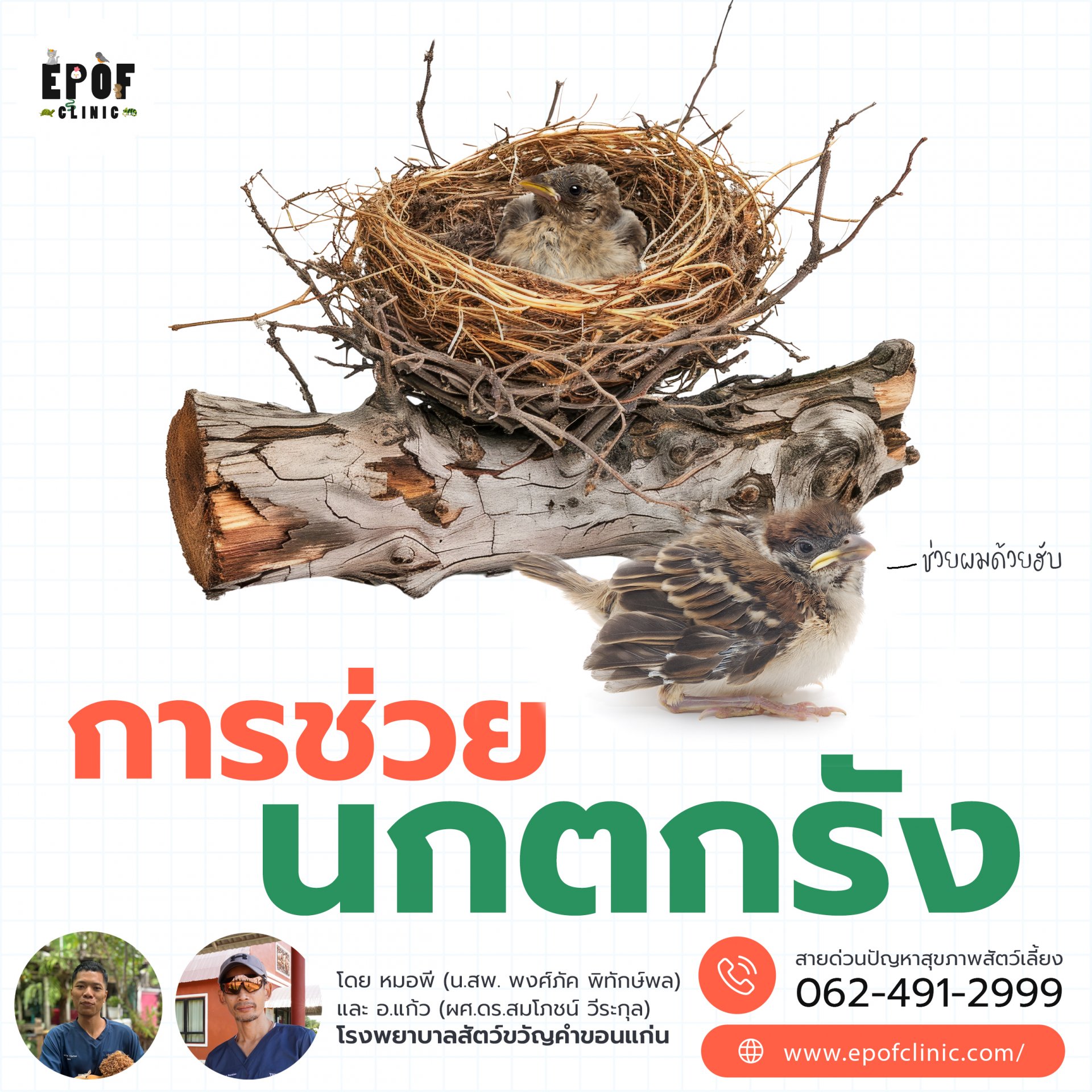
Translation: Principles of Rescuing Fallen Birds
In my previous post, I discussed the principles of wildlife nursing (birds), which can be applied when deciding how to help a fallen bird. (You can read more on the epofclinic page or via any Kwankhum Animal Hospital media outlet). While rescuing a fallen bird is often straightforward, some cases require extreme caution. Birds that are not yet strong fliers often sustain impact injuries from hitting the ground or colliding with objects before they are found.
One critical sign of an emergency—based on ABC (Airway, Breathing, Circulation) assessment—is a progressive decline in consciousness and a lack of vocalization. Even if the bird chirped initially or during its placement in an oxygen box or incubator, a gradual silence often indicates internal trauma and organ damage, which carries a high mortality rate.
However, many birds have a good chance of survival if they are not severely injured. Rescuers can perform a preliminary assessment by categorizing fallen birds into three developmental stages, each with different risks and solutions:
The Three Developmental Stages
Group 1: Neonates (Hatchlings/Nestlings) – These are very young, often featherless or only covered in down.
Group 2: Juveniles (Branchers) – These birds are growing wing and tail feathers. In the context of "fallen birds," this group includes those whose feathers are not yet full, making them unable to fly or hop effectively.
Group 3: Fledglings – These are older juveniles with full wing and tail feathers who are currently learning to fly.
Stage-Specific Assessment and Care
1. Neonatal Stage (The Most Critical) These birds are pink-skinned with only downy fluff; their primary feathers have not yet developed. If you find a bird at this stage, try returning it to the nest. If the parents are seen circling or returning to feed it, the bird has a chance. However, if the bird is injured or the weather is severe, consider taking it in for hand-rearing. Notably, neonates rarely "fall" out of curiosity; they are usually displaced by storms, predators, or parents culling a weak or sick chick. Because these underlying causes vary, survival under parental care is less certain, and most are brought in for professional nursing.
2. Juvenile & Fledgling Stages Juveniles are much stronger. They typically fall while climbing or practicing flight. Since it is difficult for parents to carry a non-flying juvenile back to a high nest, rescuers should place the bird back in the nest or a nearby safe branch.
For birds that can fly but are still weak, the parents will usually watch from a nearby branch. In this case, observe from a distance. Only intervene if the parents reject the bird, or if the environment/weather becomes life-threatening. Positive signs include parents feeding the chick, perching together, and the chick vocalizing and eating.
Red Flags and Clinical Considerations
If the bird is lethargic, silent, non-responsive to its parents, or if the parents are nowhere to be found, it should be sent to a veterinarian. These birds often suffer from:
Bone fractures
Traumatic Brain Injury (TBI) or neurological shock
Internal inflammation or severe muscle damage (Myopathy)
Birds are experts at hiding symptoms (masking), so any lack of response should be treated with caution.
The Rescuer’s Dilemma
Deciding between letting nature take its course (observation) and immediate intervention is often the hardest part. While hand-rearing might seem "easier" or safer, allowing a bird to be raised by its parents prevents the loss of wild instincts and avoids the fatal risks of Capture Myopathy—stress-induced muscle degradation caused by handling and medical procedures.
Ultimately, careful observation on the scene is the best tool for making the right decision.


