What Makes ZOO NUTRITION Good? What Problems Does It Solve?
3272 Views |
What Makes ZOO NUTRITION Good? What Problems Does It Solve?
By Asst. Prof. Dr. Somphoth Weerakul (Ajarn Kaew)
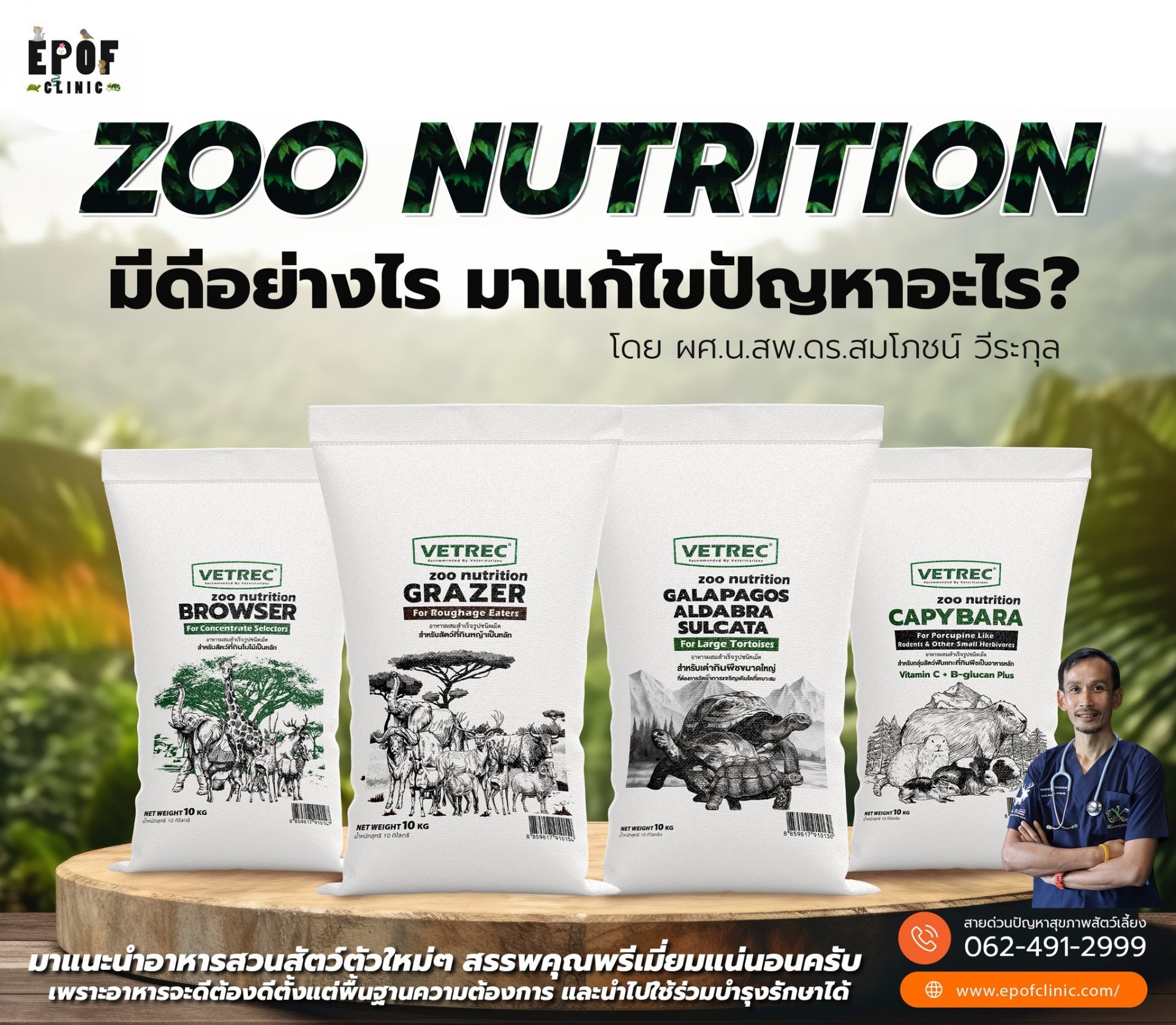
I’d like to introduce some new zoo animal diets. I can guarantee their "premium" quality because a truly good diet must be built on a foundation of basic nutritional needs while also being capable of supporting medical recovery. Here is a brief introduction to four of our products:
1. VETREC ZOO NUTRITION BROWSER for Concentrate Selectors
Specifically formulated for browsers (animals that primarily eat leaves). This formula utilizes African Acacia directly, ensuring tannin levels are high and appropriate for species like Giraffes, Kudus, and others. It is also enhanced with various specialized extracts.
2. VETREC ZOO NUTRITION GRAZER for Roughage Eaters
Designed for grazers (animals that primarily eat grass). This formula provides "cool energy" with a precise balance of fiber and energy. This ensures better growth rates compared to standard concentrates and significantly reduces the risk of ileus, bloat, colic, SARA (Subacute Ruminal Acidosis), and histaminosis.
Note: Because these nutritional supports are built into the food, it helps the animal recover faster when they fall ill, making the treatment process much smoother. I will post the full ingredient list for those interested later.
3. VETREC ZOO NUTRITION CAPYBARA for Porcupine-Like Rodents
This one is particularly special. Capybaras are relatively new to many keepers, and mistakes are common. As "porcupine-like rodents," they are primarily herbivores that are prone to Vitamin C deficiency, dental overgrowth (both incisors and molars), ileus, and enteritis. This diet is specifically engineered to solve these issues.
4. VETREC ZOO NUTRITION GALAPAGOS x ALDABRA x SULCATA for Large Tortoises
Many keepers want their tortoises to grow fast. Interestingly, while tortoises in the wild have excellent growth rates, pampered captive tortoises often fail to grow properly or suffer from numerous ailments. The key factor is meeting basic requirements first.
A high-quality diet builds a solid "form" during the juvenile stage. As they reach the sub-adult stage and begin foraging, this pellet—combined with various plants—will accelerate growth naturally without forcing it. This results in a superior shell shape (preventing "pyramiding"), prevents "overspilling" legs, and reduces the risk of enteritis and ileus (which, on X-rays, appears as gas filling the digestive tract and pushing against the chest, making it hard for the tortoise to breathe).
How does Zoo Nutrition differ from other feeds?
I encourage you to check the back of the bag for details, but here are some of the key nutrients and ingredients we’ve included:
Proper Energy and Protein Source: We provide optimized energy and highly digestible protein. For herbivores, the ideal protein is around 12%. By using super-premium, high-protein grasses as a base, we can reduce starchy plant components like soybean meal and replace them with alfalfa.
Biotin: Supports metabolism and cell growth.
QBA + PA: Includes Macleaya cordata alkaloid extracts. These are well-proven to act as antioxidants, reduce inflammation, and alleviate abdominal pain.
Probiotics + Prebiotics (Inulin): Promotes healthy fermentation and gut health. Certain microbes consume carbohydrates and digestible fiber, reducing the production of lactic acid. We use a symbiotic blend to protect the digestive tract and aid energy production.
Milk Thistle: Contains Silymarin, Silybin, and Flavonoids to support early-stage liver detoxification.
Ginkgo: Extract from Ginkgo leaves to improve blood circulation.
Beta-carotenoid: A safe source of Vitamin A, helping to prevent common deficiencies.
Prebicell: Added Lignocellulose ensures adequate fiber intake, sourced directly from Africa for our browser formula.
Vitamins C, D3, and E: Prevents deficiencies tailored to the specific needs of each species, along with a complete profile of essential vitamins and minerals.


