The Deep Science of Gamecock Muscle Development
5909 Views |
The Deep Science of Gamecock Muscle Development: Beyond the Surface
Some things are read and understood immediately; others may require ten readings and still remain elusive. This is because we are diving into the realm of physiology. For those with a background in the field, this may seem elementary, but for the uninitiated, let’s peel back the layers and get to the "marrow" of the matter.
The Misconception of "Doping"
There is a profound misunderstanding regarding muscle development in gamecocks. We have raised these birds for generations, yet many still fail to grasp the internal biological mechanisms—specifically, how muscles function and how to optimize their efficiency. We rely heavily on supplements and "doping" agents, often using them blindly.
Those who rely solely on stimulants have yet to reach the "stars." There are various types of doping: blood boosters, erythropoietin stimulants, alertness enhancers, neuro-stimulants, and even libido boosters or energy drinks. Currently, there is a misguided trend toward high-protein loading—using whey protein or massive amounts of amino acids designed for human bodybuilding. Some even resort to anabolic agents like testosterone and steroids.
While I will later address why high-protein supplements and energy drinks are often inappropriate, let’s first discuss stimulants. These substances make a bird aggressive, fast, and energetic—exactly what an owner wants to see. However, they force the body to use energy in only two restrictive ways:
The Phosphagen System: In the opening seconds, the bird utilizes phosphocreatine, converting it to creatine to rapidly donate a phosphoryl group to ADP, creating ATP. This is the explosive energy used by 100-meter sprinters.
Anaerobic Glycolysis: If the exertion continues, the "Fast Twitch" (white muscle) fibers take over via anaerobic pathways. This leads to the accumulation of lactic acid, resulting in fatigue and eventual cramping. Even a second dose of stimulants won't help at this stage because the body’s energy pathways are already inhibited.
The aftermath is often grim. A few days post-match, many birds die or recover slowly due to muscle degradation and the overproduction of myoglobin. While the body normally clears myoglobin, an excess is highly toxic and lethal. This is the price of using stimulants without understanding the science.
The Pillars of Strength, Agility, and Endurance
To develop a bird that is tough, agile, and possesses high endurance, several principles must be followed:
1. Raising the Lactate Threshold
We must minimize lactic acid accumulation. Proper training improves circulation and respiration, raising the Lactate Threshold. While most think only of "panting" to expel $CO_2$, the real secret lies in the Cori Cycle—the process that converts lactate back into glucose in the liver to be reused as energy. Enhancing the respiratory system and the organs responsible for this "Phase II Detoxification" is the key.
2. Shifting to Aerobic Metabolism
It is impossible to prevent lactic acid entirely, but we can lower its production by increasing blood flow and oxygen levels.
The Science: Glucose (from paddy rice or bran) enters Glycolysis. In an anaerobic state, it turns into pyruvate and then lactate.
The Goal: We want to pull that pyruvate into the Mitochondria to enter the Krebs Cycle and the Electron Transport Chain (Aerobic Respiration).
The Math: Aerobic respiration yields 36 ATP, whereas the anaerobic route yields significantly less. The aerobic path provides 18 times more energy per glucose molecule.
Can Nutrition Bridge the Gap?
Yes. Certain nutrients—often ignored in local poultry circles—can bypass glycolysis and enter the Krebs Cycle directly. This allows the bird to maintain steady, oxygen-based energy. A bird fueled this way, combined with proper aerobic conditioning, can exhibit 10 to 20 times the endurance and vigor of an average bird.
What about High Protein?
High-protein doping is largely useless during a fight because protein is not a primary "on-tap" energy source. Protein serves a different purpose: Repair and Hypertrophy.
During rest and recovery, when muscles have been pushed to the limit, Satellite Cells (Myoblasts) are activated. They fuse with Myofibrils, incorporating protein to increase muscle size. Gamecocks actually utilize protein for this process more efficiently than mammals. However, a "big" muscle isn't necessarily a "durable" one. Without the aerobic efficiency mentioned above, a muscular bird is just a bodybuilder trying to run a marathon.
The "Chao Phayu" & "Nok Bin" Strategy
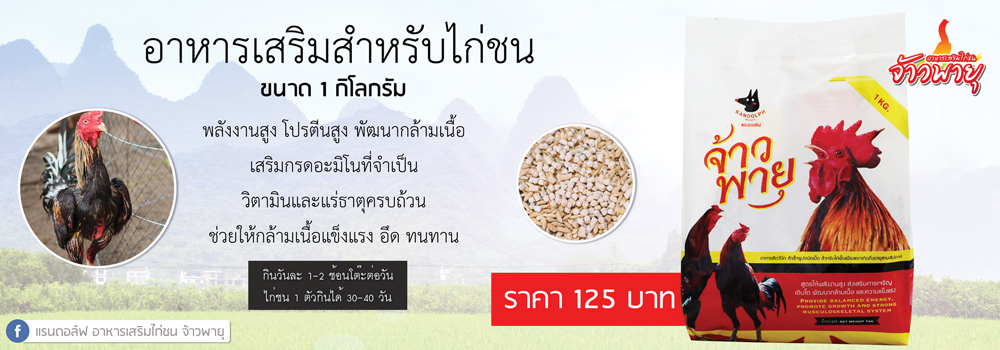
The "Chao Phayu" formula is designed with these physiological truths in mind. It doesn't just build bulk; it optimizes energy utilization.
Lactate Clearance: It supports the organs involved in the Cori Cycle and Phase II Detoxification.
Oxygen Delivery: It contains nutrients that facilitate the transfer of oxygen from the blood to Myoglobin in the muscle, ensuring the Krebs Cycle runs at peak capacity.
For maximum results, using it alongside "Nok Bin" provides therapeutic levels of these essential nutrients. Whether you are developing a chick from day one or preparing a champion for the pit, understanding the science of the "marrow" is what separates the masters from the amateurs.