Knowledge Snippets about CITES and TRAFFIC
3660 Views |

Knowledge Snippets about CITES and TRAFFIC
By: Dr. Panatcha Chalermthip (Dr. Parn)
The trade of wild animals and plants is a global issue that affects biodiversity. To regulate and monitor these activities, international organizations and conventions have been established. Two of the most prominent are CITES and TRAFFIC.
1. What is CITES?
CITES stands for the Convention on International Trade in Endangered Species of Wild Fauna and Flora. It is an international agreement between governments.
Objective: To ensure that international trade in specimens of wild animals and plants does not threaten the survival of the species.
How it works: CITES works by subjecting international trade in specimens of selected species to certain controls. All import, export, re-export, and introduction from the sea of species covered by the Convention has to be authorized through a licensing system.
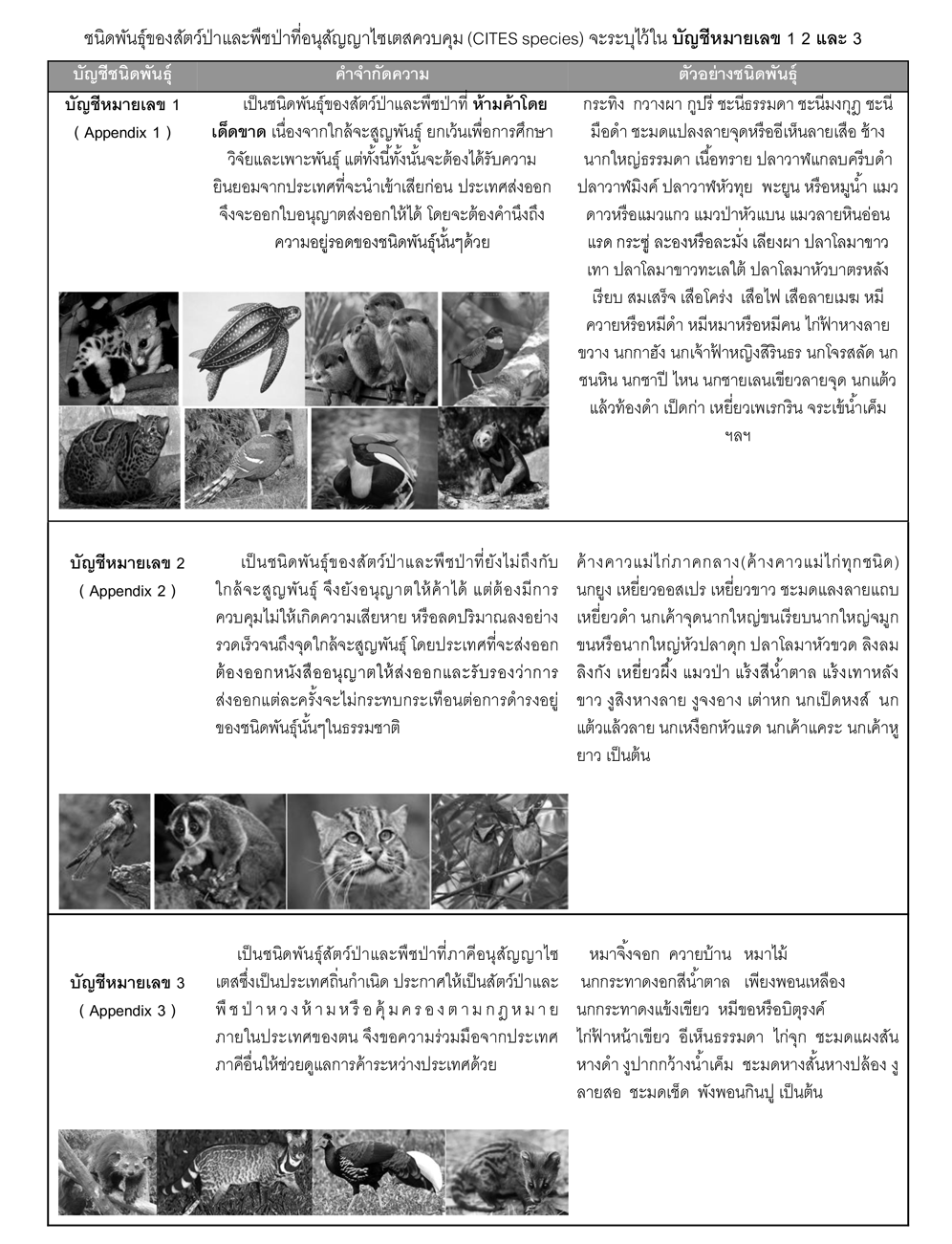
Appendices: The species covered by CITES are listed in three Appendices, according to the degree of protection they need:
Appendix I: Includes species threatened with extinction. Trade in specimens of these species is permitted only in exceptional circumstances.
Appendix II: Includes species not necessarily threatened with extinction, but in which trade must be controlled in order to avoid utilization incompatible with their survival.
Appendix III: Contains species that are protected in at least one country, which has asked other CITES Parties for assistance in controlling the trade.
2. What is TRAFFIC?
TRAFFIC stands for the Trade Records Analysis of Flora and Fauna in Commerce. It is a leading non-governmental organization (NGO) working globally on trade in wild animals and plants in the context of both biodiversity conservation and sustainable development.
Objective: To ensure that trade in wild plants and animals is not a threat to the conservation of nature.
Role: TRAFFIC investigates and analyzes wildlife trade data. They work closely with CITES by providing information and expert advice to help identify illegal trade patterns and support law enforcement.
Focus: While CITES is a legally binding treaty between nations, TRAFFIC acts as a monitoring network that tracks markets, identifies trends in illegal smuggling, and provides scientific evidence to drive policy changes.
Summary of the Difference
CITES is an International Convention (Law/Agreement) that sets the rules for trade between countries.
TRAFFIC is an Organization (Monitoring Network) that researches, tracks, and reports on the trade to ensure those rules are followed and to protect endangered species from over-exploitation.
เกร็ดความรู้เกี่ยวกับ CITES และ TRAFFIC
หมอป่าน : สพ.ญ.ปณัฐชา เฉลิมทิพย์