Detecting Abnormalities in Birds Through Their Droppings
44384 Views |

Detecting Abnormalities in Birds Through Their Droppings
By Dr. Kaew (Asst. Prof. Dr. Somphoth Weerakul, DVM)
Observing a bird's droppings is vital for medical diagnosis. It allows owners to easily identify hidden health issues before they become severe.
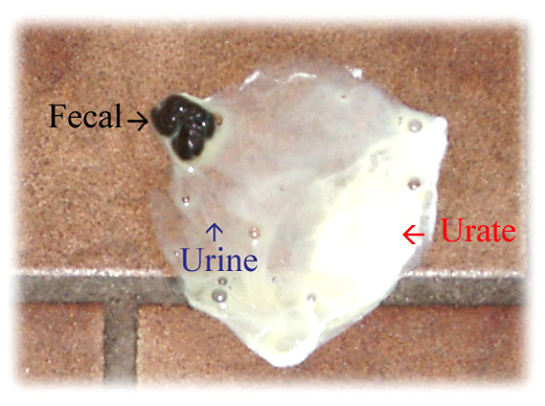
The Three Components of Bird Droppings
A single "dropping" actually consists of three distinct parts:
Feces: The solid waste.
Urate: The creamy white byproduct of protein metabolism.
Urine: The liquid waste.
While these parts often mix, you can usually distinguish them upon closer inspection:
The wet ring surrounding the dropping is the Urine.
The white to cream-colored paste is the Urate.
The solid, colored portion is the Feces.
Monitoring droppings is crucial because birds have high metabolic rates. Small birds typically defecate 25–50 times per day, while larger birds defecate 8–15 times per day. The appearance varies by species and depends heavily on their diet and water intake. As an owner, you must be a keen observer; if a bird falls ill, their droppings are usually the first thing to change.
1. Feces (The Solid Part)
Healthy feces should not contain blood or undigested food. It should generally be firm, though it may become watery due to stress (such as traveling) or after receiving medication. It is important to distinguish watery feces from excess urine.
Color Indicators:
Black: May indicate hemolysis (breakdown of red blood cells—common in Amazon parrots), anemia, internal ulcers, tumors, gastrointestinal inflammation, liver disease, or issues in the oviduct/cloaca.
Greyish-White: Often suggests malnutrition, poor nutrient absorption, or a decrease in fecal volume due to reduced appetite.
Dry/Hard: Usually a sign of dehydration or liver issues.
Watery/Undigested Food: Can be caused by excessive water or vegetable intake. However, it may also signal malabsorption, abnormal GI motility (often due to parasites or GI disease), pancreatitis, or sour crop (ingluvitis).
2. Urate (The White Part)
Normally, urates are white to cream-colored.
Color Indicators:
Green, Yellow, or Brown: This indicates an increase in biliverdin, often caused by hemolysis, toxic hepatitis (liver inflammation), malnutrition, Psittacosis (Chlamydia), or viral infections. Green urate is a classic sign of liver deterioration.
Absence of Urate: If no urate is present in the dropping at all, it may indicate severe kidney or liver disease.
3. Urine (The Liquid Part)
An excessive amount of urine (polyuria) can be caused by:
Increased water consumption.
Kidney or liver disease.
Diabetes (frequently seen in Cockatiels).
Stress or side effects from medications, such as aminoglycoside antibiotics (e.g., Ampicillin, Amoxicillin), steroids, or progesterone.
Vitamin A deficiency or Vitamin D toxicity.
A diet excessively high in salt.
Summary
Now that you have a basic understanding of how to monitor your pet’s health through their droppings, please remember to check them daily. Early detection can save your bird's life!