African Grey Parrot and Hypocalcemic Tetany
12590 Views |
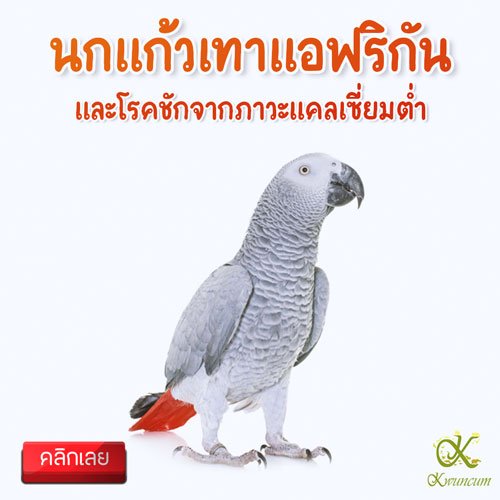
African Grey Parrot and Hypocalcemic Tetany
By Dr. Patawee Nimsakul (Dr. James)
Scientific Name: Psittacus erithacus
The African Grey Parrot is one of the most popular bird species kept as pets worldwide, including in Thailand, due to its charm and exceptional intelligence. They are capable of memorizing up to 1,500 words and mimicking a wide variety of sounds.
Classified as medium-sized hookbill parrots, they are divided into two distinct subspecies:
Congo African Grey Parrot: Larger than the Timneh, measuring 12–14 inches and weighing approximately 400–650 grams. They feature light grey feathers on the head and wings, white faces, and a bright red tail.
Timneh African Grey Parrot: Smaller in size (11–13 inches) and weighing about 275–400 grams. They have darker charcoal-grey feathers, a maroon-colored tail, and a light pinkish upper mandible (beak).
While African Grey Parrots can live for 40–60 years, it has been observed that their average lifespan in captivity is often shorter. Studies suggest that this species faces unique health challenges compared to other parrots whose lifespans tend to increase under human care.
Diet and Nutrition
African Greys require a diverse diet to maintain optimal health. Relying on a single type of food often leads to nutritional deficiencies and subsequent diseases.
Recommended Dietary Proportions:
50% Grains: Wheat, corn, oats, and various types of rice provide essential carbohydrates, proteins, minerals, and vitamins.
40% Vegetables and Fruits: These are vital sources of Vitamin A and C. However, they are low in protein, calcium, and Vitamin D. It is crucial to provide fresh and clean produce to avoid Aspergillus spp. and pathogenic bacteria.
5-10% Mixed Seeds and Nuts: While popular (e.g., sunflower seeds, peanuts), these are high in fat and lack protein, calcium, Vitamin A, and Vitamin D.
Many nutritional deficiency issues in African Greys and Cockatiels stem from a diet consisting of only one food type. For this reason, all-in-one formulated pellets have been developed to provide balanced nutrition. Nevertheless, owners should still supplement pellets with a variety of mixed seeds, fruits, and vegetables.
Hypocalcemic Seizures in African Grey Parrots
Hypocalcemic seizures (seizures caused by low blood calcium levels) are a common problem in African Grey Parrots. This condition often occurs because this specific species has a higher demand for calcium or a different calcium metabolism process compared to other parrots.


