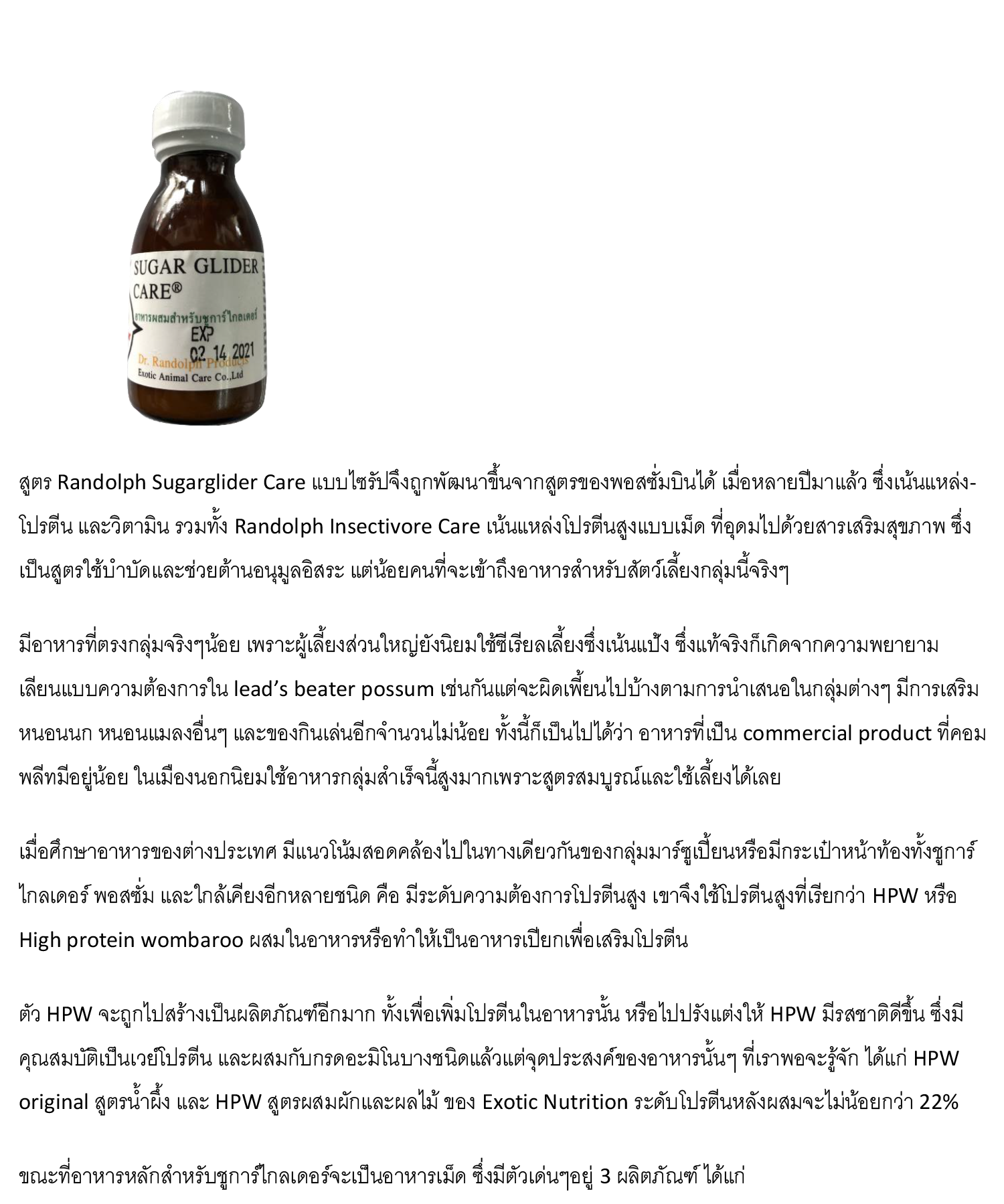
Sugar Glider Diet and Captive Care Abroad
4290 Views |

Sugar Glider Diet and Captive Care Abroad
Sugar gliders are unique exotic pets that require specific nutritional care. Based on international standards and veterinary recommendations, their diet and husbandry can be summarized as follows:
1. Natural Diet vs. Captive Diet
In the wild, sugar gliders are omnivores. Their diet changes seasonally, consisting of tree sap (eucalyptus), acacia gum, nectar, pollen, and various insects. In captivity, it is challenging to replicate this exactly, so balanced diets have been developed.
2. Popular Diet Plans (International Standards)
International keepers often follow specific nutritional "staple" recipes to ensure the correct Calcium-to-Phosphorus ratio (ideally 2:1). Popular diets include:
BML (Bourbon’s Modified Leadbeater’s): A strictly measured recipe involving honey, eggs, cereal, and specific vitamins.
TPG (The Pet Glider Diet): Focuses on a variety of fresh fruits and vegetables mixed with a protein base and specific vitamins.
HPW (High Protein Wombaroo): Uses a protein supplement powder mixed with honey, water, and eggs.
3. Essential Components of the Diet
Protein (approx. 25-50%): Can come from cooked poultry, eggs, or insects (mealworms/crickets).
Fruits and Vegetables (approx. 50%): A wide variety should be offered to provide micronutrients.
Calcium Supplementation: Crucial for preventing Metabolic Bone Disease (MBD), a common ailment in sugar gliders.
4. Foods to Avoid (Toxic/Harmful)
Chocolate and Caffeine: Highly toxic.
Onions and Garlic: Can cause anemia.
Fruit Pits and Seeds: Can be toxic or cause intestinal blockage.
High-Fat Foods: Leading to obesity and "fatty liver" issues.
Excessive Spinach or Rhubarb: These contain oxalates that interfere with calcium absorption.
5. Captive Husbandry Insights
Social Interaction: In many countries, it is considered unethical (and in some places, illegal) to keep a sugar glider alone. They are highly social animals and should live in pairs or colonies.
Space: Large, vertical cages are required to allow for gliding and climbing.
Enrichment: Providing foraging toys and safe exercise wheels is essential for their mental health.