Why is My Goldfish Swimming Weirdly? Causes and Solutions
19023 Views |

Why is My Goldfish Swimming Weirdly? Causes and Solutions
By Dr. Pornchanit Tanticharoenwiroj (Dr. Oil)
Have you ever noticed goldfish owners bringing their pets to the clinic with symptoms like tilting to one side, swimming upside down, floating with their tails up, or sinking unnaturally? Some fish remain stuck at the bottom of the pond, unable to swim to the surface like normal fish.
These symptoms are clinical signs of "Swim Bladder Disorder," which refers to an abnormality in the goldfish's swim bladder.
What Causes Swim Bladder Abnormalities?
Whenever a fish's internal organs—particularly the digestive tract—become enlarged, they can compress the swim bladder. This pressure reduces the bladder's functionality or displaces it into an abnormal position.
The primary causes include:
Gulping excess air: Swallowing too much air while feeding leads to air accumulation in the digestive tract, which presses against the swim bladder.
Low-fiber diets: Poor quality food can lead to constipation.
Overfeeding: Excess food intake causes fat accumulation in the liver (Fatty Liver), leading to organ enlargement.
Internal tumors or organ enlargement: Physical masses within the body cavity can compress the bladder.
Sepsis: Systemic infections in the bloodstream.
Treatment Guidelines
Adjust Water Temperature: Cold water slows down digestion, leading to constipation. Aim to maintain the water temperature between 70–80°F.
Fast the Fish: If the cause is overfeeding, stop feeding for 3 days to allow the digestive tract to return to its normal size.
Switch to High-Fiber Food: Transition to specialized fish food with a fiber content higher than 12%.
Assistive Feeding: If the fish cannot feed itself, use hand-feeding techniques or switch to sinking pellets to make it easier for the fish to reach the food.
Medication: If the disorder is caused by an infection, antibiotics (such as Fluoroquinolones, Aminoglycosides, or Beta-lactams) should be administered.
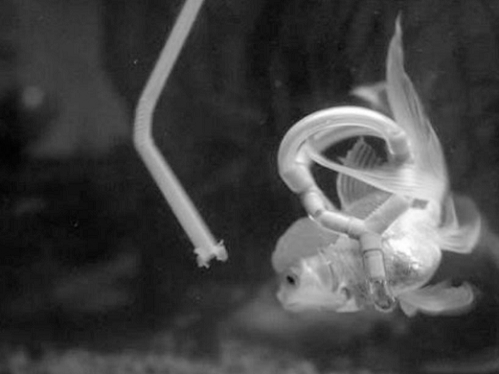
Supportive Gear: Use a "fish wheelchair" or a float to help the sick fish maintain a stable position and improve its quality of life.
Diagnostic Note: Radiography (X-ray) is a crucial diagnostic tool used to identify the specific underlying cause of the disorder.
Case Studies & Visual References
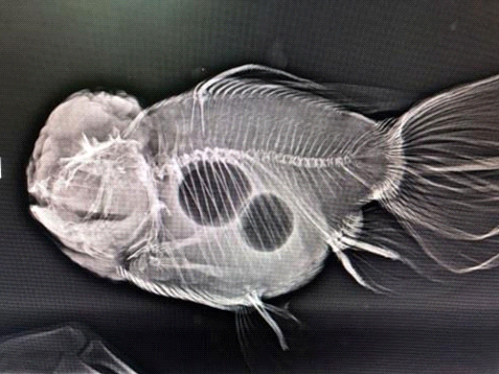
Figure 1: Shows a normal goldfish swim bladder consisting of two sections: the Cranial lobe (front) and the Caudal lobe (back).
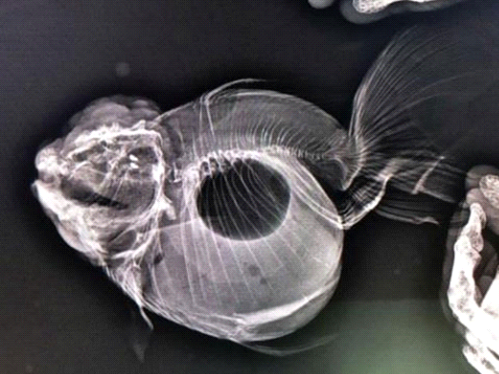
Figure 2: A case study where the fish has only one swim bladder lobe remaining. This fish swims with its tail tilted upward but can still eat and live normally.
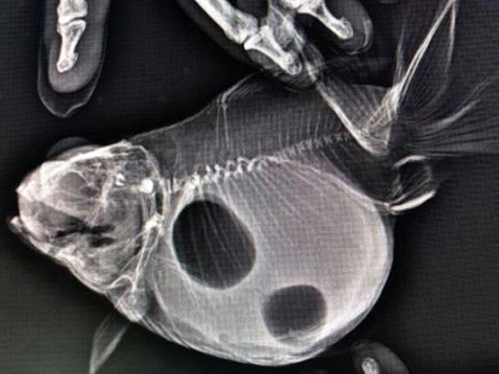
Figure 3: A case study showing the Caudal lobe displaced toward the abdomen, causing the fish to swim upside down.
Figure 4: Illustrates the use of a DIY buoyancy aid (life jacket) made from air tubing and oxygen connectors to support the fish.
l


